
Fuel cells are part of the initiative to reduce global warming to just 1.5° by 2050, as set out in the Paris Climate Agreement.
As fuel cells are energy efficient and free of damaging emissions, they make the perfect eco-friendly energy source compared to conventional power sources.
Globally, as the drive to reduce CO2 emissions becomes more urgent, there has been increased industrialisation in fuel cell production. A significant part of this increase in productivity is the need to streamline humidity measurement in fuel cells.
What are the benefits of fuel cells?
Fuel cells are highly portable and produce clean energy. They are seen as the fuel of the future, with a great deal of global expansion across the energy industry.
According to Bosch, a single fuel cell generates only a tiny amount of power. Engineers stack them together to increase output. Four hundred fuel cells will produce up to 120KW of power. In many commercial applications, more cells will need to be stacked together.
They have a wide variety of uses.
- Emergency backup power in places like hospitals and data centres.
- A clean alternative to diesel generators in remote areas.
- Transport industry – cars, vans and public transport; trains, planes and buses are increasingly converting to fuel cell technology.
- Materials handling in warehouses – e.g. forklift trucks, pallet jacks
- Construction and utility vehicles
- Marine Industry – Ferries can be powered by large fuel cells.
- Submarines
- NASA spacecraft
Why do we need humidity measurement in Fuel Cell production?
Fuel cells are part of the clean energy solution because they do not rely on combustion. Instead, they transform chemical energy into electrical energy.
Monitoring the water and temperature levels in fuel cells is required to ensure efficiency. It is a challenging task as the environment poses extreme difficulties that require sensors to cope with the harsh conditions over a long period.
Measuring equipment must demonstrate long-term stability and remain highly sensitive to ensure precision and accuracy.

Learn more about Fuel Cell Efficiency
First, you need to understand how fuel cells operate.
They convert fuel (H2) and oxygen (O2) into electrical energy. They are often known as hydrogen fuel cells.
A typical fuel cell type is the PEM (Polymer Electrolyte Membrane).
It works like this:
- Hydrogen reacts via a catalyst to form electrons and protons.
- Protons are then carried via a permeable membrane to the cathode.
- The protons react with oxygen to form H2O (Water).
- The electrons discharge through an exterior circuit to create an electric current.
What affects fuel cell efficiency?
Two factors affect fuel cell efficiency: temperature and humidity.
These environmental conditions will have a significant impact on the efficiency of a fuel cell.
Failure to control temperature and humidity will cause several issues:
- The membrane and catalyst in the fuel cell will age faster.
- Power loss.
- Possible permanent damage to the fuel cell
- Loss of efficiency…The proton conductivity of the membrane is dependent upon its humidity The PEM is kept moist by humidifying the reaction gases hydrogen and oxygen via a precise water pump. Accurate humidity readings will allow adjustments and alterations to be made to the operation of the pump to maintain the efficiency of the fuel cell.
What are the best sensors for measuring humidity and temperature in fuel cells?
Monitoring and sensing equipment in fuel cell production must be able to cope with harsh conditions.
High humidity can lead to corrosion, unreliable readings, and a loss of stability.
It would be best to opt for sensors specifically designed to withstand humid conditions to retain accuracy and ensure longevity.
At Omni Sensors and Transmitters, we stock a wide range of humidity and temperature sensors
The E + E Elektronik HTS 801, EE260 and EE211 transmitters and probes are ideally suited to high humidity conditions as they offer long term stability and accurate measurement under the most extreme conditions. They all provide a heated sensor for permanent high humidity, in addition the EE211 offers an additional heating mode to remove temporary condensation and the HTS 801 features yet another, to eliminate any deposits from the sensor element due to chemical exposure. All have the E+E proprietary sensor element coating which protects against corrosion and pollution. They are the perfect measurement devices for test benches.

HTS 801

EE260
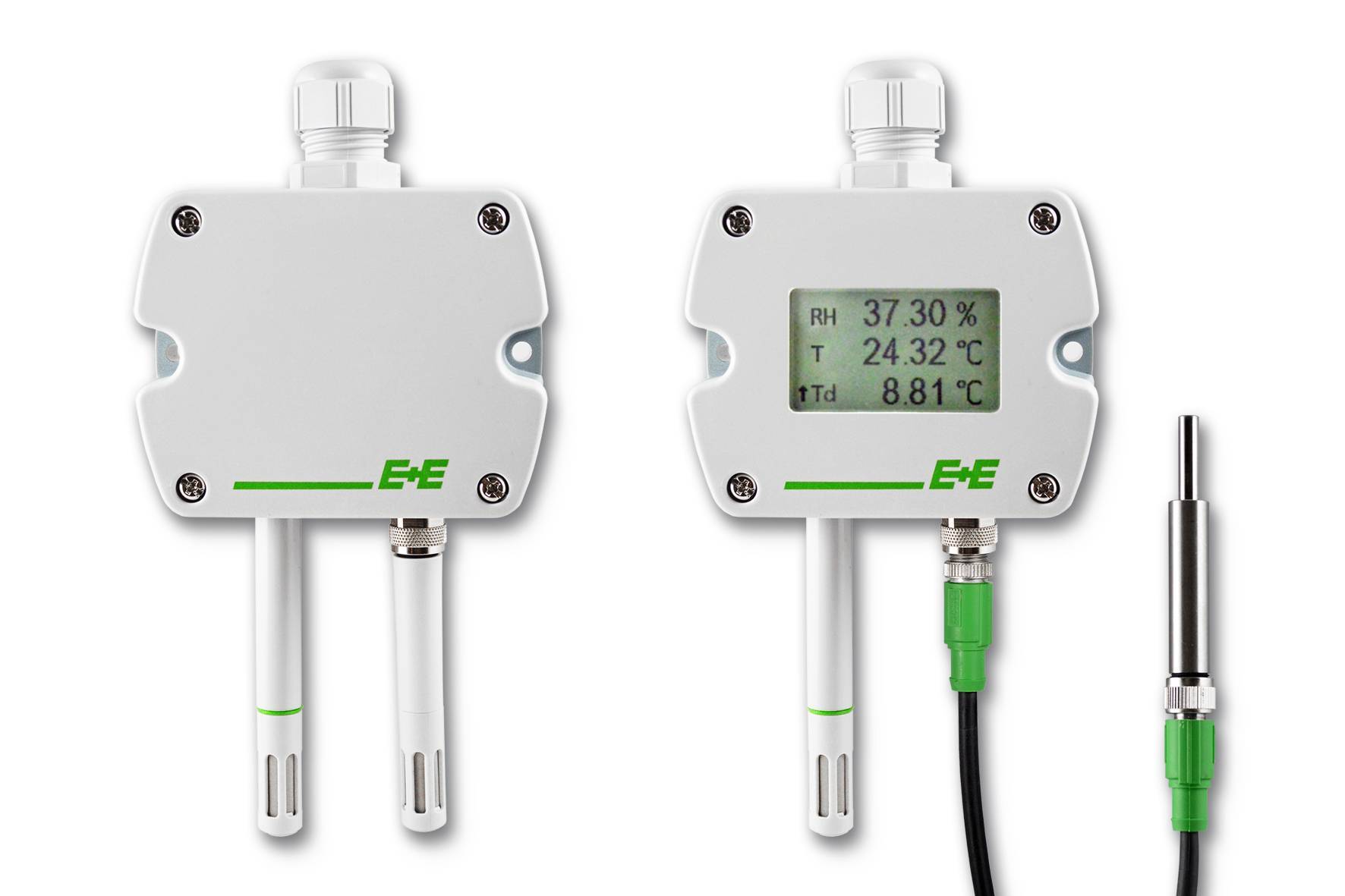
EE211