In modern industrial drying processes, controlling moisture is essential for maintaining product quality, ensuring safety, and achieving consistent production results. Even extremely small variations in humidity can lead to defects, reduced yields, or costly downtime. This is especially true in highly sensitive applications such as battery cell production, advanced coatings, plastics processing, and pharmaceutical manufacturing.
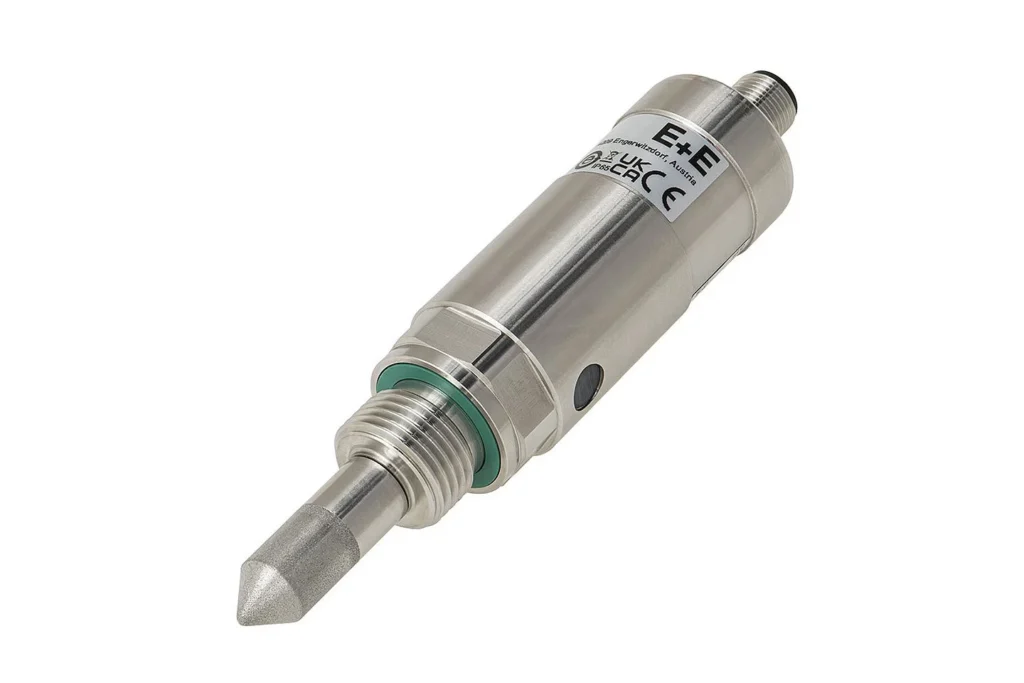
The TDS501 Dew Point Sensor is designed specifically for these demanding environments. It provides accurate and repeatable dew point measurements down to −70 °C Td (−94 °F Td), enabling precise monitoring of ultra dry conditions. Unlike conventional sensors that may interrupt measurement signals during calibration, the TDS501 delivers continuous dew point data, ensuring that operators always have a clear and reliable view of process conditions.
Thanks to its robust industrial design, fast response time, and advanced sensor technology, the TDS501 helps manufacturers maintain stable drying conditions, optimise energy usage, and avoid process blind spots that could compromise product quality. For industries such as battery cell manufacturing, where even minor moisture deviations can have significant consequences, the TDS501 provides the level of reliability and process confidence required for modern production environments.
Application Areas
The TDS501 is designed for a wide range of industrial environments where low moisture levels are critical for product quality and process stability.
Industrial Drying:
- Battery cell drying rooms
- Drying ovens for coatings, powder coatings, and electronics
- Plastics processing and granulate dryers
Pharmaceutical Industry:
- Compressed air systems used for drying processes
- Quality control in coating, filling, and packaging operations
Food & Beverage
- Compressed air drying systems
- Moisture control for coating, filling, and packaging processes
Key Features
The TDS501 combines robust hardware with advanced sensing technology to deliver reliable dew point measurement in demanding industrial conditions.
- E+E Quattro Sensor Technology with four capacitive sensing elements
- Continuous measurement signal during auto-calibration
- Dew point monitoring down to −70 °C Td
- Additional humidity parameters: Frost point temperature (Tf) , Vol concentration (Wv)
- High measurement accuracy of ±2 °C Td
- Wide operating temperature range
- Fast response to moisture changes
- Pressure rating up to 80 bar (1,160 psi)
- Robust stainless steel housing and sintered filter for industrial durability
- Condensation resistant sensing elements
- Configurable filter caps for optimal response time and protection
- Simple setup with PCS10 configuration software
- Analogue and digital interface compatibility
Advantages and Benefits
Continuous Measurement Without Process Blind Spots
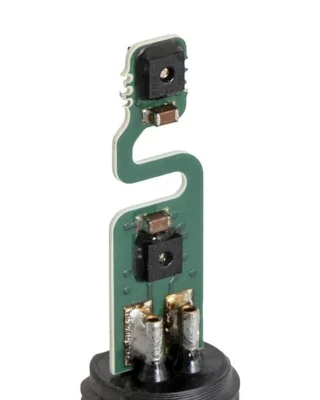
In moisture critical industrial processes continuous dew point monitoring is essential for maintaining stable drying conditions and protecting product quality. Many conventional dew point sensors pause or freeze their output signal during auto-calibration. In fast-changing environments such as industrial drying systems, compressed air networks, and battery cell production, this can create temporary process blind spots where real moisture changes are not detected.
The TDS501 dew point sensor eliminates this risk through its innovative Quattro Sensor Technology, designed specifically for uninterrupted dew point measurement in very low moisture environments. The system integrates four robust capacitive sensing elements, developed and manufactured in-house, within a coordinated measurement platform. While one sensing element continuously measures the process dew point, the others support the auto-calibration process in the background.
This intelligent four-element measuring method enables real-time dew point monitoring without interrupting the measurement signal, ensuring operators always have accurate moisture data for process control. The result is continuous in line dew point measurement, stable control loops, and improved long term measurement reliability, even in demanding low-dew-point applications across different devices, production batches, and operating conditions.
Dew point monitoring down to -70 °C Td for demanding industrial drying
 Many industrial drying processes require extremely low moisture levels to maintain product quality and stable production conditions. The TDS501 dew point sensor provides accurate measurement down to −70 °C Td, making it ideal for applications where even small amounts of moisture can cause defects or reduce process reliability.
In these environments, dew point often acts as a critical control variable rather than simply a monitored value. Maintaining a stable ultra dry atmosphere helps prevent moisture-related scrap, improve production consistency, and reduce the need for overly cautious safety margins. This is particularly important in demanding processes such as battery cell manufacturing and plastics material drying, where even brief increases in humidity can affect product performance.
Low dew point monitoring is also essential in adsorption dryer systems (PSA). In these systems, performance depends on the adsorption capacity of the drying media and the effectiveness of regeneration cycles. Continuous dew point measurement allows operators to confirm that the dryer is operating within specification and to detect early signs of adsorption breakthrough or declining drying efficiency before the process is affected.
Reliable monitoring at very low dew points also supports compressed air systems and critical gas supplies, helping ensure consistent dryness, protect equipment, and maintain gas quality across industrial distribution networks.
Reliable Dew Point Measurement in Condensation Conditions
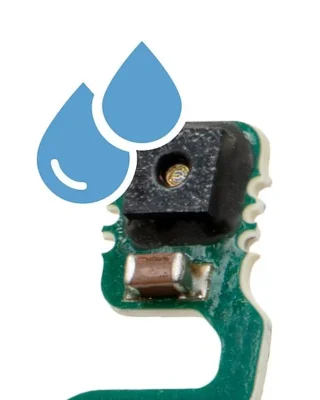 Industrial drying and compressed air systems do not always operate under perfect conditions. Events such as start-up, shutdown, seasonal fluctuations, or sudden load changes can introduce temporary condensation, which can negatively impact standard dew point sensors and lead to measurement drift or unreliable readings.
The TDS501 dew point sensor is specifically engineered to maintain accurate and stable performance even during these challenging conditions. Its design incorporates wettable capacitive sensing elements that can tolerate exposure to condensation without damage, combined with a robust stainless steel housing and sintered filter protection for durability in harsh industrial environments.
In addition, an advanced auto-calibration system continuously supports measurement stability, helping to correct for any potential deviations caused by changing conditions. This integrated approach ensures reliable, continuous dew point monitoring, reduces the need for maintenance or troubleshooting, and delivers long-term measurement accuracy even when operating conditions move outside the ideal range.
Fast Response for Reliable Process Control
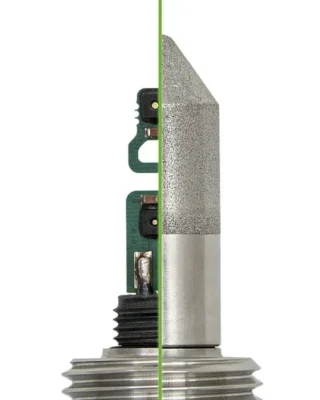
In drying processes, moisture conditions can change rapidly. The TDS501 is engineered for fast response to dew point changes, ensuring that control systems receive timely data to maintain stable operating conditions.
Configurable filter caps allow users to balance protection and response time depending on the application, with optional open filters available for cleanroom environments where faster detection is required.
Simple Integration and Configuration
The TDS501 integrates easily into industrial systems through both analogue and digital interfaces. Configuration and adjustment can be performed using the free PCS10 Product Configuration Software, making installation and commissioning straightforward.
The sensor is also compatible with the Sigma 05 host device from the modular E+E sensor platform, allowing flexible integration with additional sensing probes and optional display functionality.
Built for Process Confidence and Reliability
For organisations that depend on stable ultra low moisture conditions, the TDS501 delivers the confidence needed to keep processes running smoothly. With its combination of continuous measurement, long term stability, and robust design, it supports consistent product quality while helping to reduce energy consumption and avoid unplanned downtime.