Hydrogen measurement and leak detection are critical in various industries where hydrogen is used or produced. Here are some applications where accurate hydrogen measurement or leak detection is essential to maximise efficiency, minimise costs and ensure safety :
-
Chemical Industry:
In the chemical industry, hydrogen is often used as a reactant or feedstock in various processes such as hydrogenation, 1% to 10% by volume, refining e.g. hydrocracking 5% to 20% by volume, and ammonia production, often close to or at pure hydrogen (100%). Accurate measurement and detection of hydrogen leaks are vital to ensure safety and prevent accidents. Gas sensors or other leak detection devices are installed around equipment, pipelines and storage tanks to continuously monitor the surrounding atmosphere for hydrogen, triggering alarms if concentrations exceed preset thresholds.
-
Power Generation:
Hydrogen is increasingly being explored as a clean energy carrier, particularly in fuel cell technology for power generation. Monitoring hydrogen levels in fuel cells and detecting leaks in hydrogen storage and distribution systems are essential for safe and efficient operation. Gas sensors are used to detect the concentration of hydrogen in the air or within the fuel cell stack. They are located at the fuel inlet, 99.99% purity, and at the outlet, residual hydrogen, to maximise fuel usage and ensure hydrogen levels in the exhaust gas remain below explosion limits, also within the stack itself as hydrogen concentration can vary spatially and temporally, depending on factors such as the operating conditions, load demand, and design of the stack.
-
Aerospace Industry:
Liquid Hydrogen, LH2, is used as a fuel in rocket propulsion systems used in satellites, space launch vehicles and rockets. Liquid oxygen, Lox, is added to it at lower concentrations to achieve optimal combustion and maximise performance. Hydrogen’s high thermal conductivity and low molecular weight also make it an effective coolant in certain aerospace applications, dissipating heat from various components.
-
Automotive Industry:
In fuel cell vehicles (FCVs), hydrogen is used as a fuel to generate electricity through electrochemical reactions within the fuel cell stack. The concentration of hydrogen in FCVs is essentially 100% regardless of the storage method; compressed hydrogen gas (CHG) or liquid hydrogen (LH2). The primary considerations for FCVs are the storage pressure and temperature respectively. These are optimised to ensure efficient storage, delivery, and utilisation of hydrogen as a fuel for generating electricity in the fuel cell stack.
Monitoring hydrogen levels in fuel tanks and detecting leaks in the fuel system are critical for the safe operation of FCVs.
-
Hydrogen Production and Storage Facilities:
Facilities that produce and store hydrogen, such as electrolysis plants incorporate gas detection and monitoring systems to continuously measure hydrogen levels in various areas of the plant; i.e gas collection and storage systems, and surrounding work areas.
Hydrogen is not monitored directly within the electrolyser compartments during normal operation, but key parameters are controlled to ensure efficient hydrogen production. Leak detection systems are used to identify and mitigate hydrogen leaks which can derive from piping, valves, fittings, and electrolyser cells.
At hydrogen refuelling stations the concentration of hydrogen monitored is often close to or at pure hydrogen (i.e., 99.97% or higher). This minimises the risk of contamination or impurities affecting vehicle performance or fuel cell durability and maximises safety. Gas analysers or sensors are used to continuously monitor the purity of the dispensed hydrogen and ensure that it meets the required specifications,
Hydrogen storage facilities at refueling facilities use various technologies as previously mentioned; compressed gas storage, liquid hydrogen storage, or chemical storage materials. The concentration of hydrogen in all instances is close to 100%. Gas sensors or monitoring systems are installed within storage facilities to continuously monitor hydrogen levels, detect leaks, and ensure the safe handling and storage of hydrogen.
-
Food Industry:
Hydrogen is sometimes used in food processing applications, such as hydrogenation of oils in the production of margarine. Hydrogen gas is added to unsaturated fatty acids under high pressure and temperature in the presence of a catalyst.
It can also be used at < 5% volume in modified atmosphere packaging (MAP) to extend the shelf life of certain food products. The concentrations of hydrogen used in these applications are carefully controlled and regulated to ensure product quality and safety.
-
Laboratory and Research Facilities:
Hydrogen is used in many laboratories for experiments and research applications;
- Gas Chromatography; high purity hydrogen as a carrier gas.
- Chemical reactions; various concentrations
- Analytical techniques for material characterisation, e.g. Thermal Desorption Spectroscopy (TDS)
- Calibration standards
-
Environmental Monitoring:
Hydrogen leaks can have environmental impacts, particularly in enclosed spaces or confined environments. Monitoring hydrogen levels and promptly detecting leaks lessens environmental risks associated with hydrogen usage.
-
Industrial Hygiene and Safety:
In any environment where hydrogen is handled or produced, ensuring the safety of workers is paramount. Monitoring hydrogen levels and promptly detecting leaks help maintain safe working conditions.
In all the above applications, accurate hydrogen measurement and effective leak detection systems are essential to ensure safety, maintain operational efficiency, and prevent environmental impacts.
There are several options available when it comes to leak detection: ultrasonic, tracer gas and pressure drop detection to name a few, but our focus is Hydrogen Sensors which are specifically designed to detect hydrogen gas. They work by measuring the concentration of hydrogen in the air. Hydrogen sensors employ different technologies e.g. catalytic, metal oxide, MPS (Thermal conductivity), and electrochemical. The choice of detector is determined by but not limited to; the application, accessibility of the sensor once installed, lifetime, stability, power requirement, size, and cost.
The application influences; the detection range, the ambient conditions in terms of temperature and humidity, potential interferant gases and pollutants, speed of response, sensitivity, etc…

Catalytic sensors have a wide detection range, the Figaro 0-100% LEL TGS 6812 is robust to temperature, humidity, and pollutants but is sensitive to methane and LP gas in addition to hydrogen. It has a quick response of ≤30s, has a long life, is stable, has a low power requirement of 525 mW, and is low cost. This sensor can be supplied as a pre-calibrated module. If a more rapid response and lower power consumption is required please contact Omnisensors and Transmitters for information on the FCS-H20.
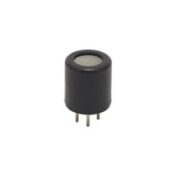
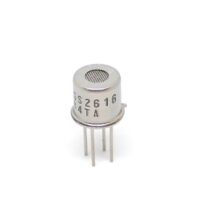
Metal oxide sensors have a limited range of detection, the Figaro TGS 2616 has a range of 30-3000 ppm, which is approximately 7.3% LEL. It is affected by variations in temperature and humidity so will require compensation. The TGS 2616 has been engineered to be selective to hydrogen but there remains a small degree of cross interference from hydrocarbons and alcohol. The sensor has a fast response, has a long life but requires routine calibration/ bump testing due to long-term drift. The sensor is compact and heater power consumption is 280mW and is price comparable with Figaro catalytic sensors for larger order volumes.
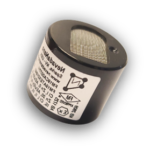
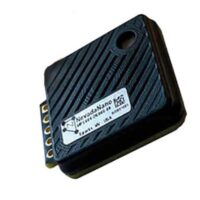
MPS sensors have a wide detection range of 0-100% LEL, the Nevadanano MPS sensor for flammable gases not only measures the % LEL of hydrogen but is also capable of measuring the % LEL across a mix of up to a dozen combustible gases. The sensor contains sensors to provide humidity, temperature and pressure compensation ensuring high accuracy regardless of environmental conditions. The MPS doesn’t drift, age, or poison. It never requires field calibration and is maintenance-free over its long lifetime of typically 15 years. The power requirement is extremely low at 29mW. The price may be high relative to other sensing technologies, but this sensor is the best solution for installations in inaccessible places.
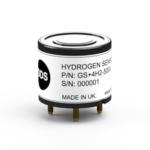
Electrochemical sensors have a wide detection range, DD Scientific offers three ranges up to 1,000, 5,000, or 50,000 ppm. The sensors require temperature compensation for optimal accuracy. The sensors have low cross-sensitivity to most common gases with the exceptions of CO and NO. Response time is quick T90 ≤20s. There is no power requirement but sensor life is limited so replacement and recalibration are necessary every 2 years. Cost is similar to the catalytic sensors and the footprint is just a few mm larger.