What Is a Data Centre and Why Does It Consume Enormous Amounts of Energy?
A data centre is a highly controlled facility that houses servers, networking equipment and storage systems that power cloud computing, AI applications, streaming platforms and enterprise IT infrastructure. As digital demand accelerates, data centres have become the backbone of the modern economy, but this critical role comes with a significant energy footprint.
One of the primary reasons data centres consume enormous amounts of energy is the need to maintain strict environmental conditions to ensure uptime, reliability and equipment longevity. Servers generate substantial heat during operation, and without precise cooling and airflow management, performance degradation or system failures can occur.
HVAC and climate control systems alone can account for up to 30–40% of a data centre’s total energy consumption. Cooling systems must continuously regulate temperature, humidity, airflow and pressure to prevent overheating, condensation and electrostatic risks. Even small inefficiencies in environmental control can result in excessive energy usage due to overcooling, poor airflow balancing or unnecessary safety margins.
Importantly, research and operational benchmarks show that increasing rack inlet temperature by just 1 °C can reduce cooling energy demand by up to 9%. However, this optimisation is only possible when environmental parameters are measured accurately and consistently over time.
Why Data Centres Are Increasing — and How Process Environment Control Can Minimise Energy Usage
The global rise in digitalisation, artificial intelligence, edge computing and cloud services is driving rapid growth in data centre construction and expansion. As workloads intensify and rack densities increase, operators are under pressure to deliver higher performance while simultaneously improving sustainability and operational efficiency.
Modern data centres are evolving toward:
- Higher rack power densities
- Dynamic cooling strategies
- Greater automation and remote monitoring
- Stricter regulatory and audit requirements
With rising energy costs and sustainability targets, Power Usage Effectiveness (PUE) has become a key performance metric. Lowering PUE requires optimising the relationship between IT load and supporting infrastructure, particularly cooling and airflow systems.
This is where process environment control becomes a decisive lever. Instead of relying on conservative cooling setpoints, operators can safely optimise energy usage by precisely controlling:
- Temperature (server inlet and supply air)
- Humidity
- Differential pressure in containment zones
- Air velocity and airflow distribution
- Condensation risk in critical zones
By accurately monitoring key environmental parameters at critical measurement points, operators can minimise overcooling, optimise airflow management and implement energy-saving strategies without compromising uptime or system reliability.
These measurement points span several important zones within the data centre. The white space refers to the clean, controlled IT area where servers, storage and networking equipment are housed and where environmental stability is most critical. Cold aisles are the spaces at the front of server racks where conditioned air is delivered to equipment inlets, making them essential for precise temperature and airflow control. Containment systems, such as panels, doors or enclosed aisle structures, are used to separate hot exhaust air from cold supply air, improving cooling efficiency and preventing air mixing. Filter stages within the HVAC or air handling system are responsible for cleaning incoming or recirculated air before it reaches the IT environment, helping to maintain air quality and system performance. Finally, outdoor free-cooling zones are areas where external ambient air can be used to supplement or replace mechanical cooling when conditions allow, enabling significant energy savings when properly monitored and controlled.
Why Accurate Monitoring Matters in Data Centres
Accurate environmental monitoring is no longer a simple compliance requirement; it is a direct operational and financial lever. Even minor measurement inaccuracies can lead to inefficient control strategies, hidden energy waste and increased operational risk.
Cooling energy demand is highly sensitive to temperature control. For example, raising the server inlet temperature by just 0.5 °C can already achieve energy savings of approximately 4–5%. However, such optimisation requires a reliable and stable data basis captured exactly where it impacts system performance.
Key reasons accurate monitoring is essential include:
- Stable HVAC control and reduced energy waste
- Lower safety margins without risking uptime
- Reliable SLA and audit documentation
- Prevention of drift-related inefficiencies over time
- Early detection of humidity or condensation risks
Measurement quality is not only about what is measured, but also where and how it is measured. High sensor density, compact installation and seamless integration into BMS/BAS architectures allow operators to create a holistic and verifiable environmental monitoring strategy aligned with standards such as ASHRAE, DIN EN 50600 and ISO 22237.
Accurate environmental monitoring is the basis for effective PUE optimisation. Without stable, precise data from the right measurement points, operators must rely on conservative cooling strategies that increase energy consumption.
Targeted sensor solutions provide the reliable, high-quality measurements needed to confidently optimise temperature, airflow and humidity control, allowing energy-saving strategies to be implemented without compromising uptime, compliance or operational security.
E+E Sensor Solutions for PUE Optimisation in Data Centres
 Precise, Compact and PUE-Effective
In high-performance data centre environments, measurement accuracy directly influences energy efficiency. Precise capture of temperature, humidity, air velocity, differential pressure and condensation conditions enables operators to intentionally raise server inlet temperatures and optimise airflow management with confidence.
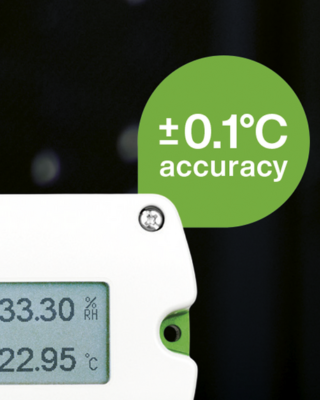
Highly accurate sensors, for example with temperature accuracy up to ±0.1 °C, create the foundation for stable control loops and measurable energy reductions. Given the rule of thumb that cooling energy demand drops by around 9% per +1 °C increase in server supply air temperature, even a small adjustment of 0.4 °C can unlock significant annual savings in large-scale facilities.
Compact sensor designs support a higher density of measurement points in critical zones, delivering a more detailed and accurate view of environmental conditions across the facility. This greater visibility allows for more precise HVAC control, minimises unnecessary cooling and improves overall energy efficiency without compromising reliability.
 Maintenance-Friendly Sensor Concepts to Maximise Operational Efficiency
Downtime for maintenance or recalibration is not acceptable in mission-critical data centre operations. Maintenance-friendly sensor concepts therefore play a vital role in ensuring continuous availability and operational efficiency.
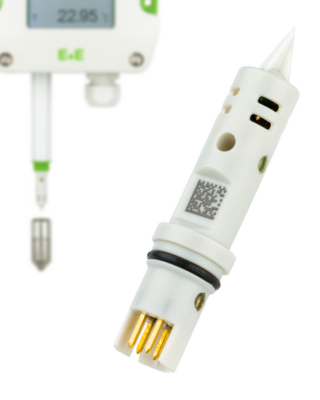
Modular and service-oriented designs allow fast replacement of probes and measuring modules without interrupting operations. Technologies such as rapid exchange measuring modules enable field replacement in minutes, significantly reducing service time and standardising maintenance processes.
Flexible installation options, including wall-mount and duct-mount configurations, further simplify integration into existing infrastructure while supporting long-term operational continuity.

 Audit-Ready Devices with Traceable Documentation
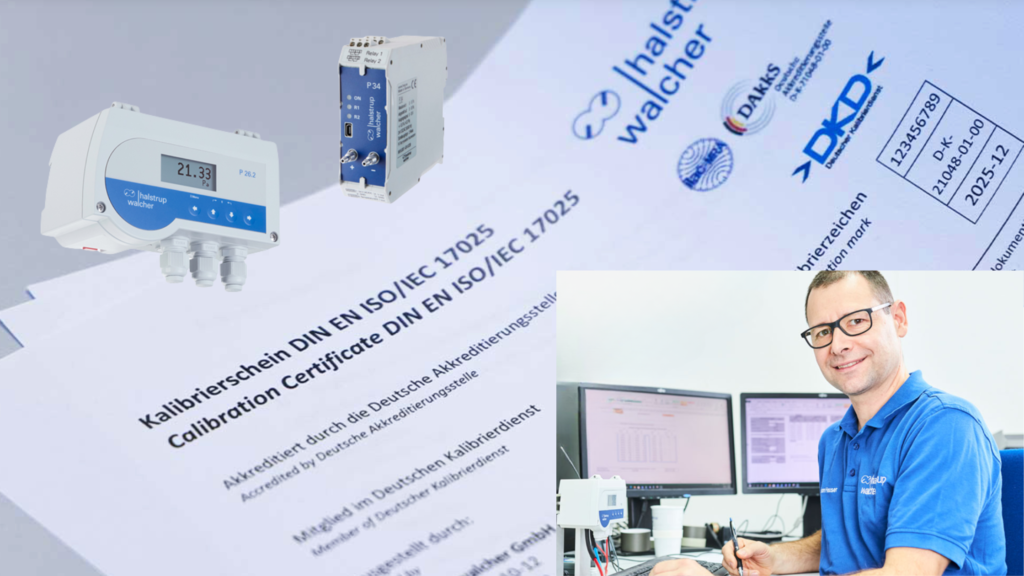
As compliance requirements and sustainability reporting increase, traceable and verifiable measurement data have become indispensable. Audit-ready sensor solutions provide documented calibration and transparent measurement quality, supporting internal audits, SLA validation and cross-site comparability.
Devices delivered with complete, traceable documentation and calibration from accredited laboratories (e.g., EN ISO/IEC 17025) ensure:
- Verifiable measurement accuracy
- Compliance with industry standards
- Reliable benchmarking of efficiency measures
- Enhanced transparency for audits and stakeholders
This audit-ready approach strengthens confidence in environmental monitoring data and supports long-term optimisation strategies.
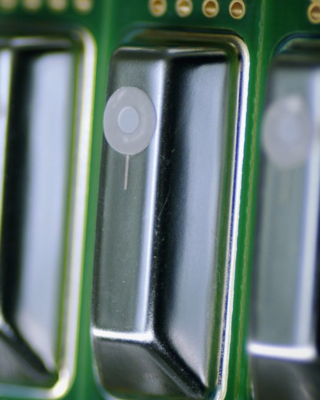 Innovation Know-How for Robustness in Harsh Data Centre Environments
Long-term stability is critical in data centres where sensor drift, ageing, contamination or extreme humidity conditions can silently compromise control strategies. Innovative sensing element development and robust protection concepts ensure reliable performance over the entire service life. Advanced features designed for robustness include:
- Protective sensor coatings
- Encapsulated sensor connections
- Automatic recovery functions (ARC)
- Condensation Guard (CG) technology
These innovations enable stable measurements of humidity, condensation, temperature, air velocity and differential pressure even under demanding environmental conditions. The result is reduced maintenance effort, fewer false alarms and consistently reliable control data.
 A Future-Proof Portfolio from a Single Source
As data centres evolve toward higher density and automated environmental control, a future-proof and integrated sensor portfolio becomes essential. A single-source solution simplifies system design, commissioning and long-term optimisation.
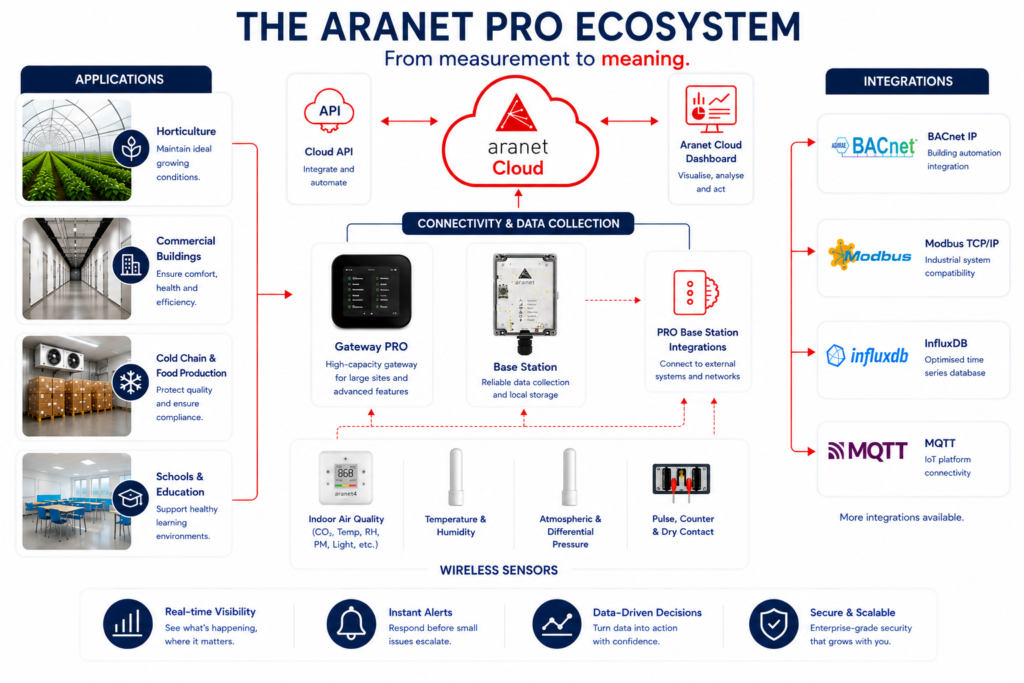
A comprehensive portfolio covering key environmental measurements including; humidity, condensation, temperature, air velocity/flow and differential pressure, ensures consistent interfaces (analogue and digital) and seamless integration into standard BMS/BAS systems.
With decades of application know-how across white space monitoring, HVAC systems, containment applications and free-cooling strategies, integrated sensor solutions support both current operational efficiency and future scalability. For operators and OEMs, this means reduced coordination effort, faster deployment and a more stable, system-wide monitoring concept.
Quantifying the Potential Cost Savings with Reliable Environmental Monitoring
Reliable, highly accurate environmental monitoring is one of the most effective levers for reducing data centre energy consumption without compromising operational safety. By enabling precise control of temperature and airflow, operators can safely raise server inlet temperatures and significantly lower cooling demand.
According to E+E’s declared operational benchmarks:
- Up to 9% lower cooling energy demand per +1 °C higher server supply air temperature
- Approximately 4–5% energy savings from a 0.5 °C increase in inlet temperature
- Around €200,000 potential annual energy savings with just a 0.4 °C higher server supply air temperature (based on 10 MW IT load, PUE 1.40 and 8,760 operating hours)
These figures clearly demonstrate that stable, long-term accurate measurements are not merely a technical detail – they are a strategic investment in energy efficiency, cost reduction and sustainable data centre operation. By combining precise sensors, maintenance-friendly concepts, audit-ready documentation and robust innovation, operators can achieve measurable PUE optimisation while ensuring maximum uptime, compliance and future-ready performance.