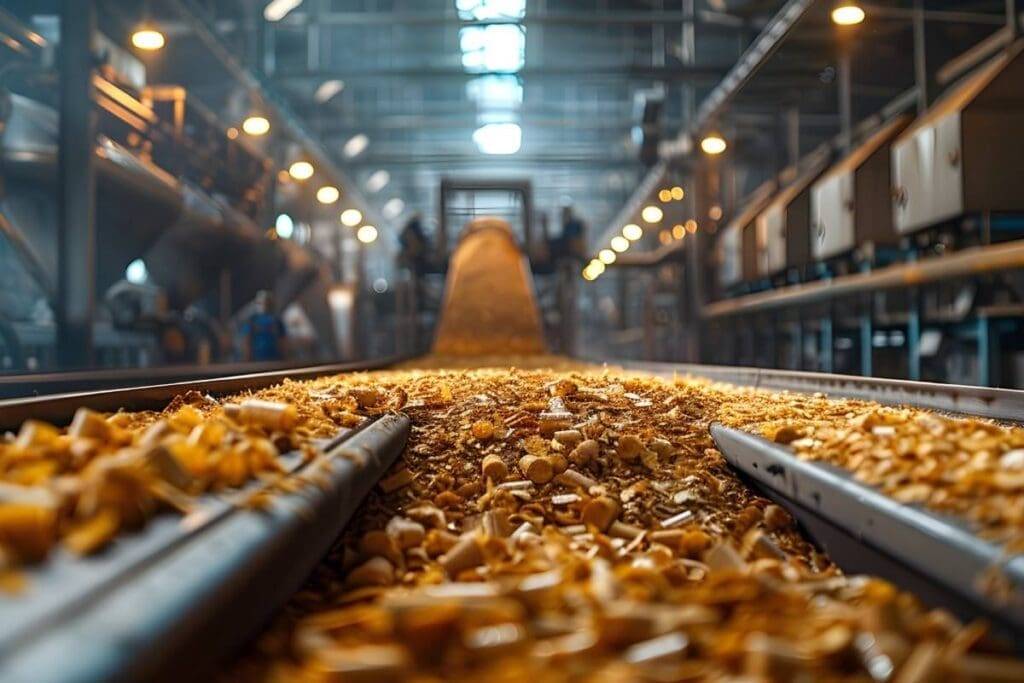

In today’s energy landscape, biomass stands as a key player in renewable fuel generation. However, ensuring the quality of this valuable resource is paramount, with moisture content playing a crucial role in determining its calorific value, storage life, emissions, ash content, and bulk density.
In the UK, biomass fuel refers to organic materials derived from plants or animals that are utilised for energy production. This can include various types of wood, agricultural residues, energy crops, and organic waste materials.
Biomass fuels are used in various applications, including heating systems for homes, businesses, and industrial facilities, as well as in power generation plants to produce electricity and heat.
Biomass energy is considered renewable because the organic materials used to produce it can be replenished over time, making it an essential component of the UK’s efforts to reduce carbon emissions and transition to a more sustainable energy future.
Accurate moisture measurement ensures that biomass is utilised effectively, maximising energy output while minimising operational risks and costs. With precise moisture data, businesses can make informed decisions, improve process efficiency, and enhance overall sustainability in their operations.
Let’s explore practical measurement methods for assessing biomass moisture content.
Unlocking Biomass Potential: Exploring Moisture Measurement Techniques
Measuring the moisture content of biomass can be done by two methods. It is vital to consider the accuracy and challenges of each technique. Efficiency and accuracy are critical factors in determining how best to improve biomass production quality and sustainability.
Laboratory Measurement
One traditional method involves drying the biomass fuel in a controlled environment for a minimum of 12 hours until a constant mass is achieved.
The water content is then calculated based on the mass loss during drying. While accurate, this method is time-consuming and prone to errors due to its complexity and potential loss of other volatile components.
Electrical Measurement Methods
Electrical methods offer viable alternatives for much faster yet precise determination of moisture content.
Conductance-based methods assess moisture content by measuring electrical conductivity, which increases with higher water content.
On the other hand, dielectric processes analyse the dielectric constant of water in biomass.
While both methods offer speed and accuracy, careful temperature compensation is crucial for reliable results.
Choosing the Right Path: Navigating Biomass Moisture Measurement Methods
Each measurement method presents its own set of advantages and limitations, highlighting the importance of correct application.
While laboratory measurement requires expertise and time, rapid electrical methods embed this expertise into the measuring device itself.
Regardless of the chosen method, adherence to standards ensures standardised measurement procedures and facilitates meaningful comparisons.
For manufacturers of moisture meters, laboratory measurement should serve as the reference standard, emphasising the need for adherence to industry standards in device development.
The Forestry Commission details a simplified version of the drying and analysis method found in the draft standard for woodfuel moisture content analysis published in the UK by the British Standards Institution1 (BSI).
If you are looking for ways to enhance your analysis of moisture contact in biomass fuel production or storage, it will be preferable to ensure you choose reliable and accurate sensing equipment. Precise calibration and quality components with protective housing are all significant factors to consider when purchasing sensing equipment.
You can make production more efficient and reliable while enhancing quality by choosing a Schaller Messtechnik humimeter:
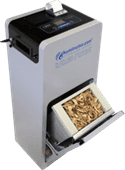 BMA-2 or BMC for a measurement of moisture in woodchips featuring a wide measurement range up to 0-70% moisture in some instances, a large 12.5l volume measurement chamber for representative readings, rapid measurement seconds compared to hours in an oven test.
https://sensorsandtransmitters.com/product/schaller-humimeter-bma-2-biomass-moisture-meter/

The portable BL2 for measurement of moisture in a range of biomass materials through selection of the appropriate insertion probe. Measuring up to 0-60% moisture in a matter of seconds with automatic temperature compensation applied for high accuracy.
https://sensorsandtransmitters.com/product/schaller-humimeter-bl2-moisture-meter-timber/
Other humimeters are available, additionally humidity and CO2 sensors.
If you want more information or assistance selecting the right set-up, contact our experienced team at Omni Sensors and Transmitters to learn more.