Monitoring and controlling moisture content is vital for comfort, efficiency and safety across various industries. It is essential to measure humidity accurately for optimal storage and production.
A humidity sensor detects, measures and reports moisture and air temperature.
To maintain quality, humidity sensors must deliver accurate results under even the most challenging conditions.
Fortunately, E+E Elektronik has developed a sensor coating that protects their sensors and ensures they remain reliable, however tricky the environment.
This article will look at the challenges humidity sensors face, their applications and the solutions.

What are the challenges for humidity sensors?
Humidity sensors are often required in situations that pose challenges for measuring equipment. These difficulties can impact results and shorten the lifespan of the equipment.
Problems you may encounter include:
- Dirt, dust and oil
- Corrosive conditions such as salt in off-shore applications
- High humidity that causes damaging deposits
Accuracy is a critical factor in monitoring equipment. Therefore any impediment that reduces long-term stability and performance is highly undesirable.
The last thing any business needs is inaccurate results caused by particles left on the sensing equipment, leading to production problems or delays.
Possible Applications for Humidity Sensors
There is a wide range of applications for humidity sensors across many sectors. Some of the most common uses occur in industries where air quality is essential for maintaining production quality, improving storage conditions and increasing efficiency:
- Agriculture
- Livestock and Poultry
- Greenhouses
- Drying Chambers
- Food Processing
- Pharmaceutical Industry
Many of these situations will naturally provide challenges for sensing equipment due to harsh environmental conditions. Sensors can be easily damaged and become unstable.
Solutions for Protecting Humidity Sensors
Once installed, you have limited options to protect humidity sensors from becoming damaged and unreliable.
Often the only solution available for keeping humidity sensors accurate is extra maintenance. Shorter cleaning intervals can help reduce damage but will lead to additional costs and losing production time.
Filter caps can be installed on sensors retrospectively to protect the sensing head or element from contamination. This offers greater protection but can lead to a poorer response time from the measuring equipment.
A far better solution is for humidity sensors to be protected before installation.
E+E Sensor Coating – Better Protection for Humidity Sensors
E+E Elektronik recognised the issue of protecting humidity sensors many years ago. They developed a special coating for their humidity sensor products to improve long-term stability and increase product life.
They use a thin, permeable layer on the sensing element to protect against unwanted deposits and particles that could reduce the equipment’s performance.
The porous coating allows moisture to diffuse without negatively impacting humidity measurement. No additional maintenance or protection is required.
Choosing humidity sensors with the E+E Elektronik coating is the perfect solution for ensuring that your environment is controlled and your production is optimal.
At Omni Sensors and Transmitters, we provide a wide range of humidity sensors depending on your needs; humidity sensing elements, modules, probes, handhelds and transmitters Wired and wireless).
Meet the latest addition to our range:
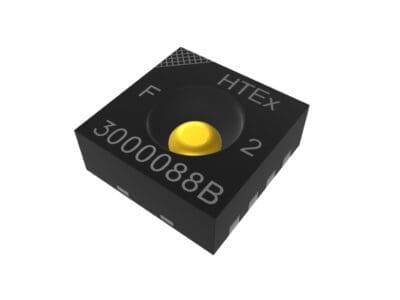
HTE501 High Precision Humidity and Temperature Sensing Element
The HTE501, with E+E special coating, provides excellent accuracy, reliability and an increased length of service in even the harshest of environments.