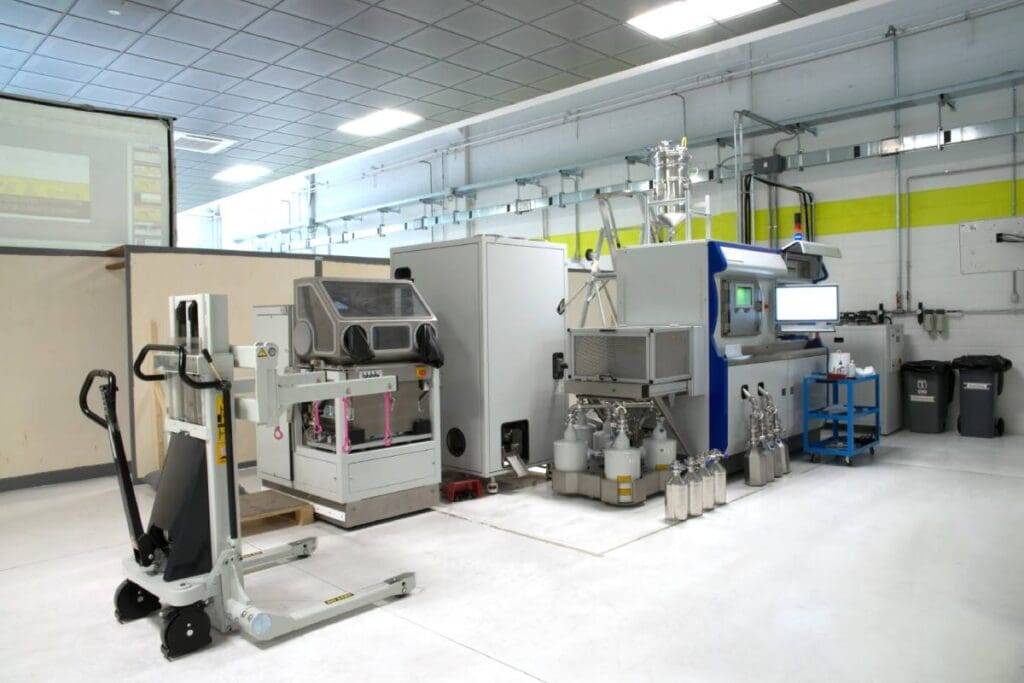
It is crucial to maintain quality when 3D metal printing, as environmental conditions directly impact a product’s finish.
The critical aspects to control in the printer chamber are gas flow and moisture content which you can monitor with sensors for measuring air velocity and dew point.
This article will explore the different methods of 3D metal printing and how sensors can monitor the gas flow and moisture in the print chamber to achieve the optimum final product.
3D Metal Printing – The Effects of Gas Flow and Moisture on the Final Product
Since most 3D printing involves protective gases, including argon, nitrogen or helium, it is vital to include reliable gas management systems. Optimum gas conditions will avoid unwanted chemical reactions such as oxidation or contamination.
3D Metal Printing Methods
There are a few different popular methods of 3D metal printing.
Powder Sintering
Powder sintering is the most popular method of 3D metal printing. It involves an energy source sintering (melting) a metal powder. The final product is built up in layers.
Two types of sintering are Direct Metal Laser Sintering, known as DMLS and Electron Beam Manufacturing, known as EBM.
Laser Metal Deposition
Laser Metal Deposition, known as LMD, is a welding method where a laser is used to produce a melt pool with metal powder application through a nozzle. The final product is built up layer by layer.
Binder Jetting Technology
Binder Jetting Technology involves depositing a liquid binding agent onto layers of metal powder. It is used to build high-end products and tooling.
Best Gas Flow Solutions for 3D Metal Printing – Air Velocity Sensors and Dew Point Sensors
Reliable gas flow and humidity monitoring is essential in the 3D Printing chamber to ensure a constant gas distribution and maintain low humidity levels respectively.
Air velocity and dew point sensors are the best way to accurately maintain and monitor your parameters.
Air Velocity Sensors in 3D Printing Chambers for Measuring Gas Flow
An air velocity sensor should be placed on the 3D printer’s gas inlet channel. It will detect the smallest of changes to the gas flow.
By monitoring the gas supply against your optimum parameters, you will maintain the perfect conditions in your chamber to achieve the best quality final product.
The bonus of a sound gas management system is efficiency and safety.
It will also avoid the following problems:
- Poor application of powder coating
- Erosion of powder coating
- Sparks and contamination
- Oxidation
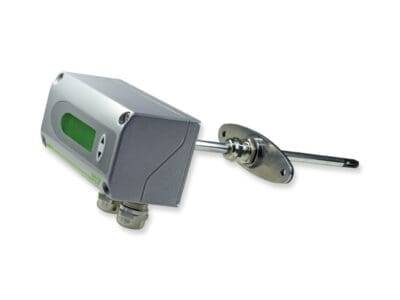
EE75 Air Velocity Sensor – Our EE75 sensor has excellent accuracy and long-term stability and is suitable for a wide range of air velocities and temperatures.
See here for information on our other Air Velocity Sensors.
Dew Point Sensors in 3D Printing Chambers for Measuring Moisture
As well as measuring gas flow, we recommend monitoring moisture as it impacts printing quality.
Depending on your chamber size, you should use 2 to 3 dew point sensors for the best results.
Using a dew point sensor will ensure that:
- You do not suffer from damp metal powder that can clump
- You avoid condensation
- You avoid dew formation that can lead to refraction on lenses and cause structural defects
EE355 Dew Point Sensor – Our EE355 sensor has precise dew point measurement at low temperatures and a compact, sturdy design. The analogue output can be easily integrated into your system.

See here for information on our other Dew Point Sensors.