In this article we will discuss how accurate humidity and temperature control ensures salami quality and yield.
Quality product results from a tightly controlled and carefully monitored manufacturing process. Although completely uncooked, salami is not raw but is cured and sometimes smoked.
The three major stages involved in the production of salami are:
- The preparation of the raw materials
- Fermentation
- Ripening and drying.
Preparation.
Firstly, raw meat, usually pork or beef is initially coarsely ground and mixed with other ingredients. These include such as spices, peppers, and yeast. Salt and sugar are then introduced and depending on the variety of salami, lactic acid bacterial starter culture.
Fermentation.
A variety of salamis are produced from a range of starter cultures with different fermentation temperatures and variable acidification rates. The climate of the curing environment, casing size and style determine the drying and curing process.
The mixture is then inserted into a variety of casings which may differ in size, colour and composition, whereupon it begins to ferment. Furthermore, the fermentation process is controlled to avoid protein denaturation and uneven coagulation. This is important to ensure the desired flavour and texture is achieved.
The salami is then hung in warm, humid conditions for up to three days to encourage the fermenting bacteria to grow. Monitoring the humidity and temperature during this period is important.
Lactic acid, a by-product of fermentation lowers the pH and coagulates the proteins, reducing the meat’s water-holding capacity. The high acidity also prevents the growth of pathogenic bacteria and imparts the characteristic tangy flavour.
Ripening and drying.
Finally, and after the fermentation process is complete, the sausage must be slowly dried. It is then transferred to a cool humidity-controlled environment where approximately half of the water is evaporated before the casings undergo a physical change rendering them more airtight. This dehydration process decreases microbial growth, minimising the risk of spoilage. Above all, modern manufacturing processes require temperature and relative humidity to be strictly controlled according to the size of the salami to ensure uniform drying and a pliable casing.
Humidity and Temperature measurement devices designed for use in demanding climate control applications.
Omni Sensors and Transmitters offer a diverse range of environmental sensors from a variety of manufacturers including E+E Elektronik. They are unique in the way they address issues of inaccuracy, instability, and sensor life. E+E Elektronik designs sensors suitable for use in high humidity and/or corrosive chemical environments.
E+ E Elektronik sensors’ features include:
- Robust sensor technology with protective coatings.
- Heated sensors.
- Contamination resistance.
- Interchangeability of sensor module.
Therefore, the result is high accuracy, reliability and minimal calibration effect.
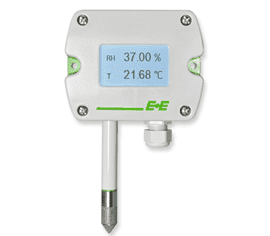
Select the EE212 wall and duct mounted temperature and humidity sensor for high accuracy and durability in aggressive environments
Features a replaceable encapsulated injection molded sensing module enabling rapid exchange and minimum downtime.
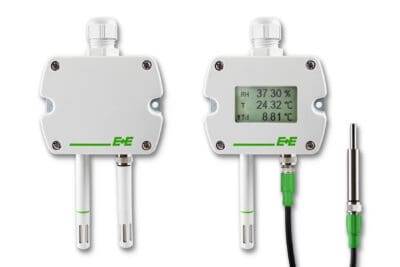
EE211 for high humidity environments.
This humidity and temperature sensor incorporates two probes: a continuously heated humidity probe and separate interchangeable temperature probe. The heated humidity sensor has protective hygroscopic coating and encapsulated electronics for long term stability and reliability.