When cultivating edible mushrooms, certain climatic conditions must be observed to ensure a maximum yield of the highest quality. From compost preparation through the growth phase to harvesting the mushrooms, it is important to ensure the optimum temperature, humidity and CO2 levels. The challenge for mushroom growers and system managers is to measure and control these climate parameters as precisely as possible. Sensors and transmitters need to be selected which perform reliably and accurately under continuous high humidity levels and a high prevalence of fungal spores.
Precision Air Conditioning Creates Natural Conditions
Conditions which only exist in nature in autumn must be ensured all year round. With the help of air-conditioning systems; temperature, humidity and CO2 concentration levels can be optimised for mushroom growth.
The Individual Phases of Mushroom Production (Fungiculture)
Ensuring mushroom growth indoors means reproducing the natural growth conditions as accurately as possible. The requirements for an air-conditioning system in mushroom cultivation are therefore driven by the individual phases of the growth process.
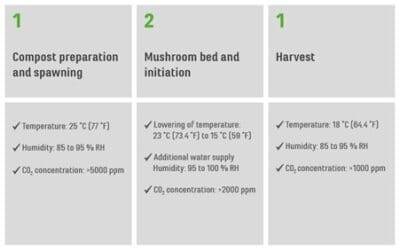
Phase 1: Compost Preparation and Spawning – Constant Temperature, High Humidity and CO2 Concentration
Fresh compost is the basis for mushroom cultivation. The mushroom threads (mycelium) are spread on it and completely penetrate the compost within 2-3 weeks. In this phase, conditions must be very humid, warm and dark.
Phase 2: Mushroom Bed Arrangement and Initiation – Gradual Lowering of Temperature
In the next step of industrial mushroom cultivation, the matured compost is spread onto mushroom beds in special growing cells. This is followed by a precisely defined process, which begins with keeping the temperature constant and ensuring a good supply of light and air. The mushroom bed is supplied with water for several days and humidity is increased to up to 100 % RH by gradually reducing the temperature. This causes the mycelium to begin to contract and form small buds from which the mushrooms develop.
In this phase, temperature, humidity and CO2concentration have a decisive influence on the growth of the fungi.
If the measurement data is erroneous it will impact the harvest yield
Phase 3: Growth and Harvest – Keeping Conditions Constant
In the growth phase up to harvesting, the temperature, humidity and CO2 concentration are kept constant for a maximum of seven days. Within one week the mushrooms reach the ideal size of 3 cm (1.2 inch) for harvesting.
Measuring Humidity, Temperature and CO2 in Mushroom Cultivation
During these individual phases, the right kind of climate control is crucial for the success of mushroom cultivation. The sensors used play a critical role here. They need to measure the temperature, humidity and CO2 concentration accurately and reliably in a particularly demanding environment. Any undetected deviation or inaccurate measurement results impact the quality and yield of the mushrooms and cost money.
To choose suitable sensors, it makes sense to define the requirements precisely, taking into account the specific environmental conditions.
Mushrooms Like Things Moist and Dirty – Sensors Don’t
Optimum environmental conditions are required for the best possible mushroom growth. The constant high humidity and high concentration of released spores pose a special challenge to the measurement technology.
- Condensation and condensation-related deposits on the sensitive sensing elements can impair measurement performance and lead to corrosion.
- Spores released by the fruit body with a size of 3-15 μm can penetrate the filter cap. The mycelium (fungal threads) formed cover sensor element surfaces leading to false readings and a reduced harvest.
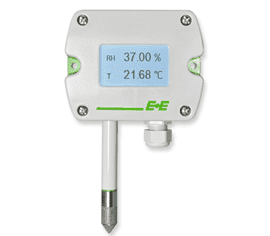
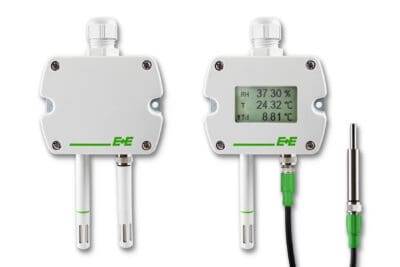
This is where the cost-effective EE212 Temperature and humidity sensor with its high accuracy and interchangeable pre-calibrated sensor module outperforms other sensors in the market as it provides a reliable measurement with negligible downtime. The EE211 temperature and humidity sensor with its heated humidity probe with protective coatings and encapsulated electronics and additional separate interchangeable temperature probe is also a highly effective measurement device under the challenging conditions.
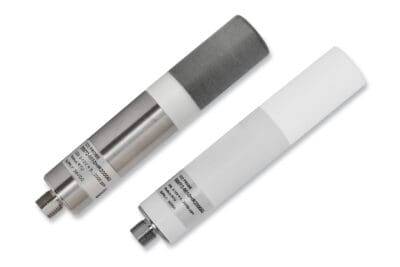
When it comes to CO2 measurement, the EE 872 is available as a stand-alone CO2, humidity, temperature and pressure probe or as a component of the Sigma O5 modular sensor platform with optional graphic display and additional outputs. This probe features an interchangeable sensing module, also an optional heated version for high humidity condensing environments.