A museum conserves and exhibits historical, artistic, cultural or scientific artifacts. Objects deteriorate over time to a greater or lesser extent dependent upon their composition, the ageing process can be minimised through optimising the display and storage environment. Humidity and temperature are key parameters which can be monitored and controlled.
The environment of the display area is not only important for the preservation of artifacts but also for the well-being of the visitors. it is important to ensure a pleasant temperature and air humidity as well as low CO2 concentrations in the exhibition space.
Since facility climate control is a significant cost factor for museum operators, it needs to be controlled as efficiently as possible.

With or without Visitors – the Indoor Atmosphere Has to Be Spot On
A large number of visitors will require increased ventilation to maintain comfortable CO2 levels conversely a low volume of visitors and outside opening hours ventilation requirements lessen due to the lower levels of CO2 present in the building but is still required to ensure constant humidity and temperature in the environment surrounding the valuable display items.
Close monitoring of the indoor atmosphere is essential to regulate the ventilation to the required minimum for the preservation of exhibits and the well-being of visitors. This ensures maximum energy efficiency and cost savings.
Indoor Climate Sensors for CO2, Humidity and Temperature
Using indoor climate sensors in exhibition and storage space and air flow sensors in ventilation ducts, means that the indoor atmosphere can be controlled in a precise and efficient way.
Indoor climate sensors must measure precisely and reliably and respond rapidly to changes in the atmosphere. Ideally, the sensors should be discreet and require minimal installation effort in terms of wiring and mounting. The range of climate monitoring sensors extends from OEM sensing elements and modules, compact humidity or temperature sensors to sensors and devices for the combined measurement of CO2, humidity and temperature with or without a display.
Humidity: HTE 501, EE 03, 10, 040, 060, 061, 150, 160 – Discover our humidity sensor range
Temperature – Discover our temperature sensor range
CO2 : EE800, 850, 895 – Discover our CO2 sensor range
Air Flow Sensors for Ventilation Control
Air flow sensors are used to monitor and control the air flow in ventilation ducts. They should operate reliably and stably in the long term.
Assembly solutions for mounting in ducts, or with remote probes, facilitate the installation and maintenance of the air flow sensors.
Discover our air flow sensor range
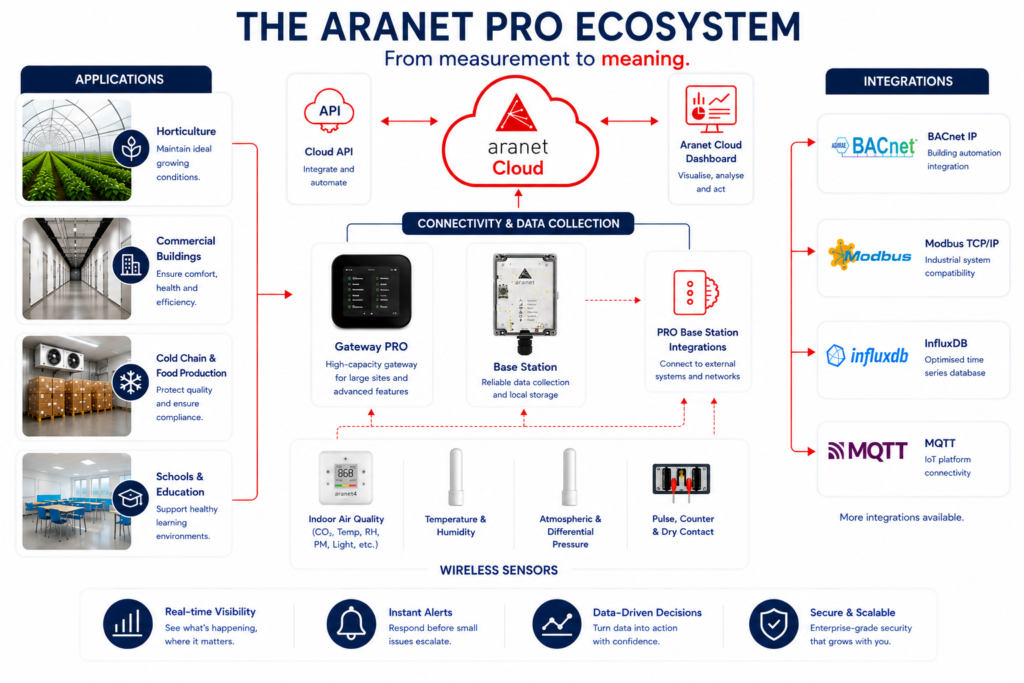
Wireless Systems for Indoor Climate Monitoring: More Flexibility, Lower Installation Costs
Wireless sensor systems are ideal for complex climate monitoring tasks or in situations where hard wiring is impossible due to space constraints, preservation orders, etc…. Cabling is not only expensive, especially in larger facilities, but also potentially damaging to historical buildings and disruptive in its installation process. The use of wireless sensors saves on cost, effort, and time
We are here to help you plan a wireless sensor system to monitor your indoor climate!