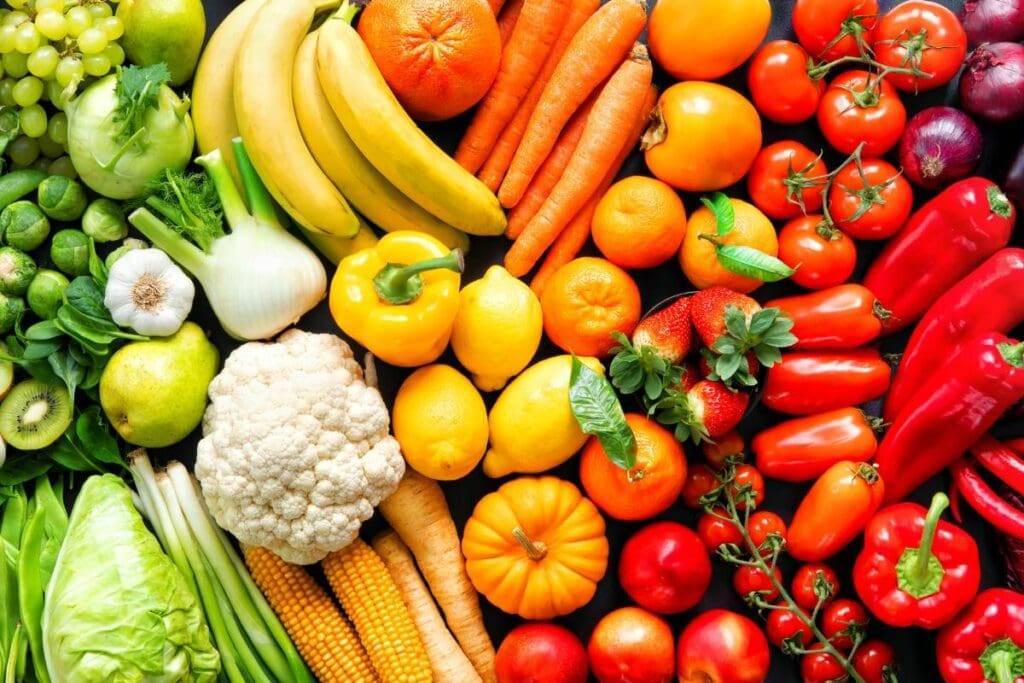
We are fortunate to be able to buy seasonal fruits and vegetables all year round. Of course, this can only happen if produce can be stored in optimum conditions over many months.
Modern technology allows storage rooms to maintain certain parameters that will increase the life of produce, such as fruit and vegetables.
The agricultural industry relies on storage with a controlled atmosphere (CA) or a dynamic controlled atmosphere (DCA). To keep your favourite fruits and vegetables longer than usual, temperature, humidity and atmosphere must be tightly controlled.
According to Science Direct, CA storage is considered one of the most successful advancements in the fruit and vegetable industry.
So how does this happen? The answer is simple: storage rooms must include sensors to accurately measure the temperature, humidity, and CO2 concentration.
This article will explain the differences between CA and DCA storage and show how sensors are crucial to keeping produce fresh.
How can I create a controlled atmosphere/CA storage?
To sell seasonal fruits and vegetables all year round, producers must store them in a way that retains their quality.
The primary factor in keeping produce fresh is storing it at low temperatures and high humidity. However, the atmosphere also plays a vital part. It involves monitoring oxygen and CO2 levels continuously.
The goal is to prevent fruit and vegetables from getting too ripe so that they can retain their quality, including their appearance, taste and colour.
How can I create a Dynamic Controlled Atmosphere/DCA storage?
DCA is more advanced than CA. The calculations for DCA storage consider the heat, water, carbon dioxide, also the ethylene that is released as some fruits ripen, e.g. bananas, tomatoes and apples as this will further contribute to fruit ripening.
A DCA storage system monitors the resulting change in the atmosphere to achieve minimal oxygen levels.
The aim is to ensure that fruit will be kept fresh with low oxygen but not be damaged by too little oxygen or too much CO2. Parameters will differ depending on the type of fruit or vegetables being stored.
What sensors are required for CA and DCA Storage?
Controlled storage can only be achieved if precise sensors are installed to monitor the climate parameters. Sensors must be accurate and reliable if they are to keep the atmosphere suitably controlled.
Humidity, Temperature and CO2 Measurement in CA and additionally O2 and ethylene sensors in DCA Storage
The primary parameters that require measuring are humidity, temperature and CO2. Parameters must remain constant to achieve optimum conditions. However, storage rooms present particular challenges for the operation of sensors.
Sensors must be:
- Accurate and stable in humid conditions
- Resistant to contamination
- Resistant to condensation
- Protected
- Easy to maintain
Recommended Sensors from Omni Sensors and Transmitters
We supply E+E sensors explicitly designed for challenging conditions such as storage rooms also SmartGAS and Figaro gas sensors for integration into OEM monitoring and control systems for CO2, ethylene and O2.
These are some examples of sensors ideal for CA or DCA storage. Please get in touch with us for more information or check out our website for details of our full range of innovative products.
At Omni Sensors and Transmitters, we offer:
the EE211 humidity and temperature sensor with a sealed coating that maintains accuracy under challenging conditions.
The EE872 CO2 probe, which is suitable for humid conditions with condensation.
The Flow Evo CO2 and ethylene module
The lead-free KE-LF oxygen sensors