In vaccine manufacturing, aseptic integrity is a regulatory and ethical imperative. Maintaining sterile conditions throughout the filling and packaging process ensures that every vial delivered to patients is safe and effective. This is achieved with the aid of a differential pressure transmitter, a powerful/ versatile device that plays a vital role in monitoring and controlling the protective barrier that separates sterile zones from the external environment.
Understanding the Protective Barrier
In aseptic production, vaccines are filled, capped, and sealed within controlled environments such as:
Cleanroom zones (Grades A, B, C, and D) rely on carefully controlled air pressure and HEPA filtration to maintain sterility. Each zone is classified by its air cleanliness level, defined by allowable particle counts and maintained pressure differentials. Because operators work inside these spaces, human activity and air movement remain the biggest sources of potential contamination.
Restricted Access Barrier Systems (RABS) – provide an additional layer of protection by creating a partial physical barrier between operators and the aseptic process. Equipped with glove ports and HEPA-filtered unidirectional airflow, they enable aseptic manual intervention but doors can be opened providing access for maintenance purposes. Operating within a Grade B cleanroom, they significantly reduce contamination risk compared to open cleanrooms, offering a practical balance between safety, flexibility, and cost.
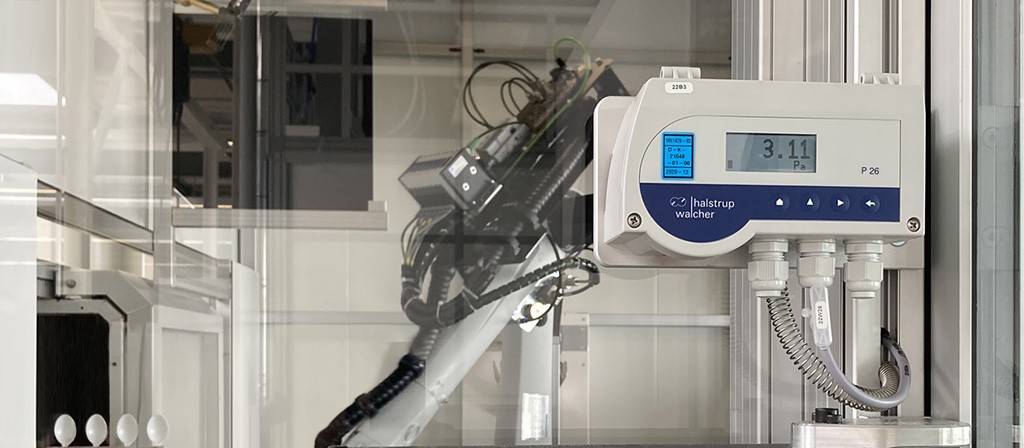
An Isolator offers the highest level of aseptic protection through a fully sealed and airtight environment that completely separates the sterile process from the external surroundings. All manipulations occur through glove ports or automated systems, and sterile air is maintained under positive pressure with HEPA or ULPA filtration. Isolators are the preferred barrier option for high-value or high-risk aseptic processes such as vaccine filling and sterile drug compounding since they eliminate the possibility of human contamination, Operators never directly enter the critical zone.
These protective barriers ensure that contaminants from the external environment never enter the sterile zone. To achieve this, the sterile core is maintained at a slightly higher air pressure than its surroundings — a principle known as positive pressure differentials.
This constant, invisible “air shield” prevents unfiltered air or microorganisms from flowing into the aseptic area, even when operators access the system through glove ports or transfer hatches.
What Is a Differential Pressure Transmitter?
A Differential Pressure (DP) Transmitter measures the difference in air pressure between two connected spaces, in this case it might be between a
Between a Grade A filling area and its Grade B background, or between the inside of an isolator and the cleanroom around it.
The device continuously calculates the pressure difference (ΔP):
ΔP=Pinside−Poutside
Typical setpoints for aseptic areas range from +10 to +20 Pascals, depending on facility design and regulatory guidelines.
Monitoring the Integrity of the Barrier
The first and most fundamental role of the DP transmitter is monitoring.
It sends a continuous signal (usually a 4–20 mA analog output or digital signal) to the Building Management System (BMS) or Environmental Monitoring System (EMS). These systems record, display, and trend the pressure data in real time.
If the pressure differential drops below the validated limit, alarms are triggered — signalling that the aseptic barrier might be compromised.
This could be caused by a HEPA filter blockage, a door left ajar, air leakage between two zones, or an HVAC system failure.
These alarms enable early intervention to prevent the risk of contamination escalating.
Closed-Loop Pressure Control
Beyond monitoring, the DP transmitter also forms part of a closed-loop control system.
The transmitter detects a change in pressure differential, transmits this to the HVAC control system which restores the setpoint pressure by automatically adjusting the fan speed or damper position.
This ensures that the aseptic environment consistently maintains positive pressure, regardless of operational fluctuations such as door openings or process heat loads.
Compliance and Quality Assurance
The EMA’s EU/UK GMP Annex 1 (2022) — enforced by both the EMA and the MHRA — mandates:
pressure differentials (and other critical environmental parameters) between cleanroom grades must be continuously monitored and recorded, and that data should be trended so that adverse trends are detectable.
alarm systems for out-of-limit values of critical environmental parameters (including pressure differentials). It also expects alarm setpoints, response procedures and that alarms are part of the control strategy.
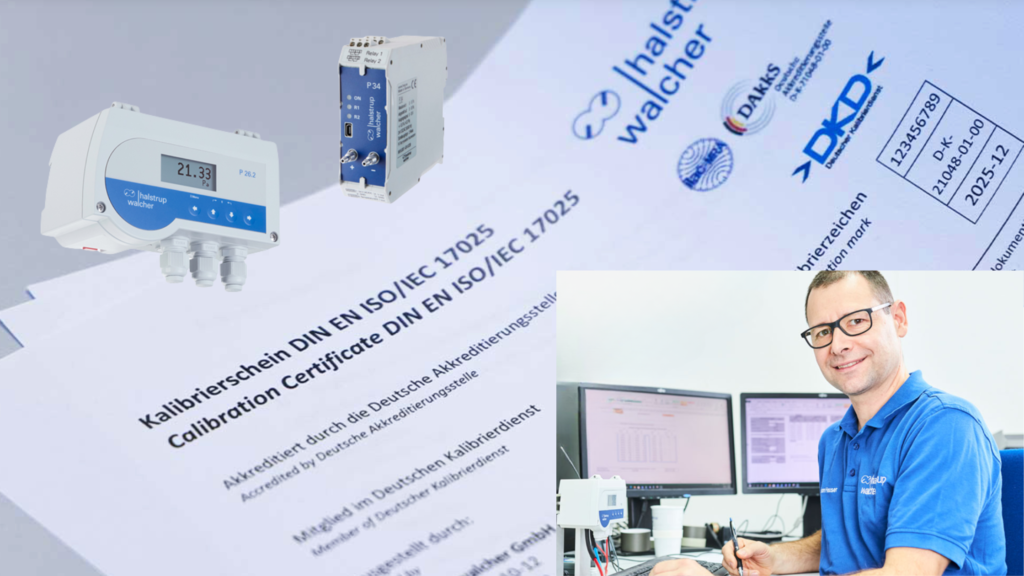
Monitoring and control systems (including instruments used to measure pressure differentials) be qualified, calibrated and maintained as part of the overall validation strategy. It also expects that the monitoring system be validated for its intended use. Regulators require a documented, risk-based calibration schedule — commonly implemented as 6–12 months for critical pressure sensors — but the exact interval should be justified by risk assessment, historical performance/trending, and supplier recommendations.
Why It Matters
The role of differential pressure transmitters extends far beyond numbers on a control screen. These devices:
- Protect the aseptic barrier by maintaining pressure gradients
- Ensure regulatory compliance with GMP standards
- Enable proactive maintenance through alarm monitoring and data trending
- Preserve product sterility — ultimately protecting patient safety
The Halstrup Walcher P26: A Standout in Cleanroom Pressure Monitoring
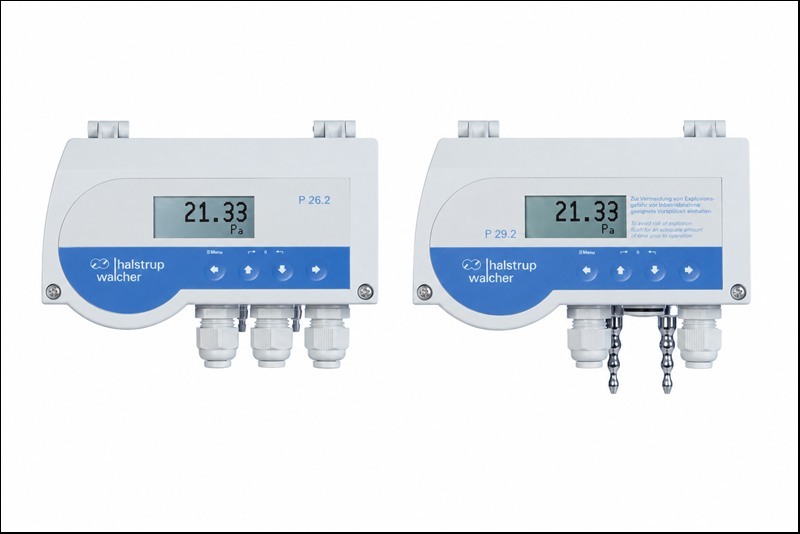
When monitoring differential pressure in aseptic production, precision and reliability are everything. The Halstrup Walcher P26 stands out as a high-performance transmitter designed specifically for cleanroom and pharmaceutical environments. It combines exceptional measurement accuracy (±0.2 % FS) with automatic zero-point calibration, ensuring long-term stability and minimal drift — a key advantage where pressure differentials of only a few Pascals safeguard sterile barriers.
The P26 supports a wide range of selectable measuring spans, robust overpressure protection, and flexible output options (0–10 V, 4–20 mA, USB), making integration into modern building or cleanroom management systems simple. Its dual alarm relays can directly trigger local or remote alerts, while the optional multicolour display and keypad allow quick setup and on-site diagnostics. Built with silicone-free materials and rated up to IP65, it’s well suited for controlled environments requiring low particle emission and regular cleaning.
Compared with standard transmitters which may offer only fixed ranges, no self-zeroing, and limited alarm or calibration functionality — the P26 offers an excellent balance of accuracy, reliability, and cleanroom compatibility at a practical cost.
When selecting a DP Transmitter, ensure it meets the application requirements: Check environmental protection, accuracy, pressure ranges, response time, alarm requirements, calibration frequency, etc. Other important considerations include the display and signal output options.
For more information on the P26 and alternative options within the Halstrup Walcher range please click on the following link. P26 pressure transmitter