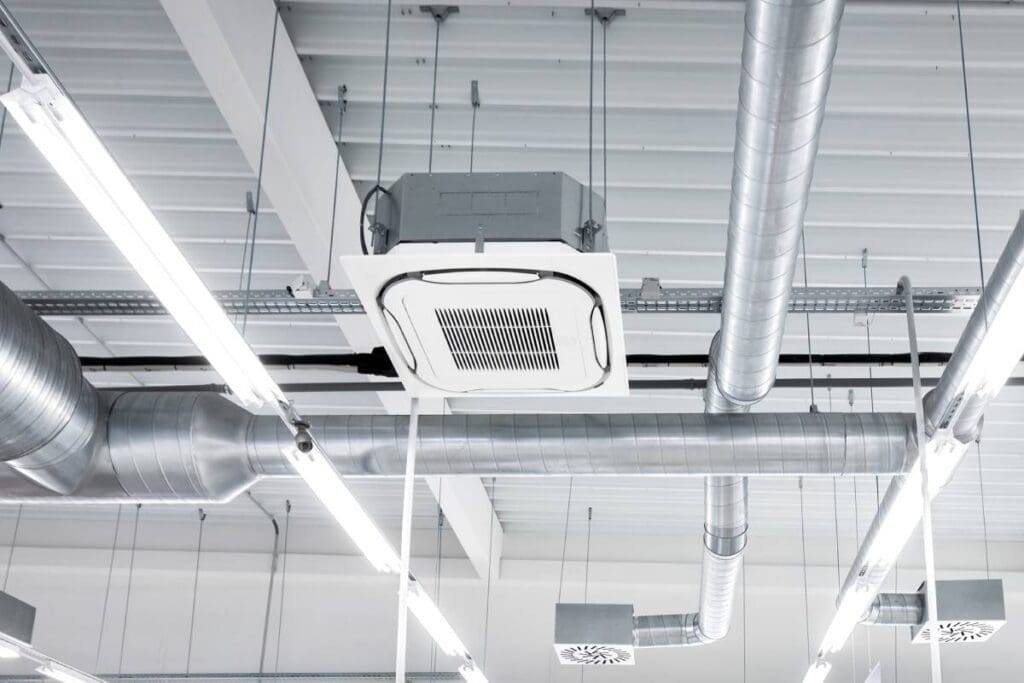

HVAC and air handling systems are made up of complex parts that all contribute to controlling and regulating the local environment. Sensors are required to monitor environmental conditions and send inputs back to the system.
Installing accurate sensors is the best way to ensure that your HVAC system runs sustainably by ensuring that your system can respond dynamically to current environmental conditions. They increase efficiency and save money on energy costs.
Each type of sensor is responsible for monitoring specific values of a fluid. They are critical as HVAC and air handling systems must maintain excellent air quality. Sensors are a vital factor in how these systems meet the required high standards, improve energy efficiency and save money.
What types of sensors are used in HVAC and air handling systems?
The recommended sensors for HVAC and air handling systems are:
- Pressure Sensors
- Temperature Sensors
- Humidity Sensors
- Indoor Air Quality Sensors
- Room Sensors
The sensors are categorised into active and passive depending on how they operate to monitor their area.
Active Sensors and their Uses in HVAC Systems
An active sensor needs an external power source. It collects environmental information and converts the data into a digital signal transmitted to the controller.
The controller turns the incoming digital value into a reading.
The main benefit of an active sensor is that it has the ability to collect data all the time without any restrictions as long as it is connected to an energy source.
The EE Compact Humidity and Temperature Transmitter is an excellent example of a cost-effective active sensor.
Passive Sensors and their Uses in HVAC Systems
Passive sensors, sometimes called probes, are used in air handling systems to provide resistance values to the controller they are wired to. The control converts the resistance value.
The advantage is that they do not require a separate energy source.
E+E sensors EE451 are used for temperature measurement in HVAC systems. They can be supplied with optional sensing elements for passive temperature measurement.
Pressure Sensors for HVAC and Air Handling Systems
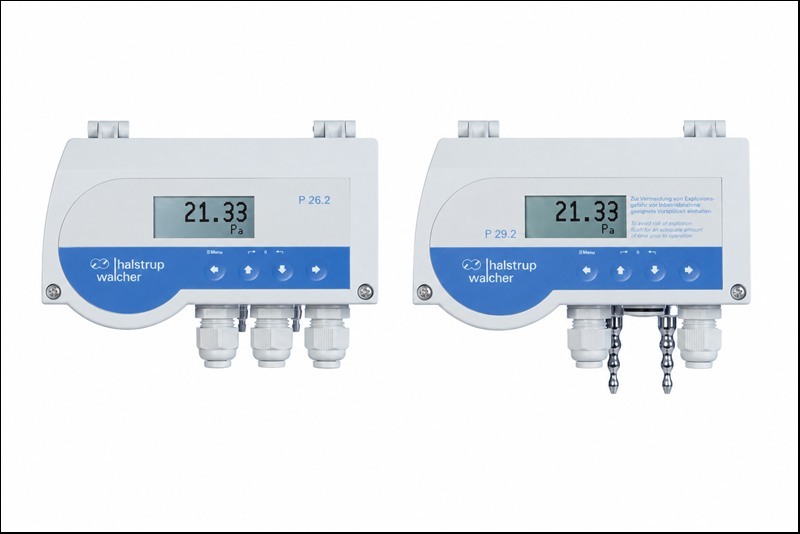
A pressure sensor is used in HVAC systems to measure the pressure drop. They must provide accurate measurements to maintain the performance of the system.
The most common unit of measurement is the Pascal (Pa), with typical pressure measurements including differential pressure and high and low pressures.
Pressure transducers are split into differential and high pressure.
Differential pressure transducers compare the pressure in two areas, while high-pressure transducers measure the highest pressure level in a specific area.
The EE600 measures differential air pressure in HVAC systems and is a highly accurate sensor with an IP65 enclosure.
Temperature Sensors for HVAC and Air Handling Systems
A temperature sensor gathers data related to the temperature in a specific environment. In an HVAC system, a temperature sensor monitors air or water temperature by sending inputs to the heater control, which will adjust output to maintain the required temperature.
The EE431 is a temperature sensor designed for use in HVAC systems. It provides active outputs, but optional probes can be used for passive recording.
Humidity Sensors for HVAC and Air Handling Systems
A humidity sensor often controls pressure and temperature. It manages the humidity in a specific environment by adding steam to the air to balance the humidity level.
HVAC humidity sensors are perfect for protecting the infrastructure of buildings and maintaining delicate environments.
Humidity sensors measure relative humidity, absolute humidity and specific humidity.
The EE150 humidity and temperature transmitter has been designed specifically for HVAC systems and stands out due to its exceptional value for money and excellent performance.
Indoor Air Quality Sensors for HVAC and Air Handling Systems
Indoor air quality sensors are crucial in maintaining air quality. They provide data that indicates how well an environment is ventilated and how well the air is filtered. They often combine sensors to offer a range of information.
EE800 precisely measures CO2, temperature, relative humidity and dewpoint in HVAC applications.
Room Sensors for HVAC and Air Handling Systems
Room sensors are designed to monitor variations in temperature and humidity to keep a room comfortable.
Specifically designed for HVAC, the EE160 is a very accurate transmitter for relative humidity and temperature, providing value and performance.
Are you looking for high-quality, cost-effective sensors for your HVAC and Air handling systems? Contact our team at Omni Sensors and Transmitters to learn more about our extensive range. We can help you find suitable sensors to ensure your HVAC systems operate efficiently and safely.