
Restaurants, pubs, bars, clubs and other hospitality venues require careful monitoring of carbon dioxide (CO2).
Hospitality establishments often store CO2 in cylinders or tanks to put the fizz into soft drinks and pump beers. Premises that store CO2 are required to hold a licence and conform to UK regulations.
More recently, COVID led to concerns over indoor air quality with a focus on providing adequate ventilation to reduce the spread of the virus. CO2 levels are a good indicator of air quality to maintain health and safety for workers and customers.
In the UK, the HSE publish guidelines on safe levels of CO2 in the workplace.
Why is CO2 Safety Essential?
CO2 can be a matter of life or death. Levels of CO2 above 50,000 ppm or 5% can be fatal.
In the UK, the government recommends keeping levels at 800 ppm or below to ensure good ventilation and air quality. Consistent levels of 1500 ppm and above are a sign of poor ventilation and need to be addressed.
CO2 is a naturally occurring gas that is emitted when we breathe out. Without adequate ventilation, it can build up and cause harm.
Spillages or leaks from tanks or cylinders can rapidly increase the proportion of CO2 in the air, especially in confined spaces.
CO2 gas makes up just 0.04% of the total volume of gases in the air. However, when changing from a liquid or solid to a gas, it expands to 535 times its volume. Even a tiny leak from a cylinder can increase levels to 3-5% of the air, causing immediate danger in an enclosed space.
The UK government introduced additional Confined Space Regulations in 2011 to tackle the potential dangers of CO2, often known as a silent killer. It is particularly crucial in cellars where there is little ventilation.
The challenge is that CO2 is colourless, tasteless and odourless, so the first signs of a toxic buildup will be when employees or customers show symptoms such as feeling faint, nausea or headaches.
Hospitality is a sector that is more at risk than many others due to crowded venues and the storage of CO2 in cylinders for fizzy drinks and beer pumps.
Reports of CO2 Safety Incidents in the UK Hospitality Sector
Fortunately, due to the HSE’s excellent work and rigid government guidelines, there are relatively few reported incidents in the UK hospitality Sector related to CO2.
However, in August 2022, the Whitchurch branch of McDonald’s in Shropshire had to evacuate customers and crew due to a CO2 leak from the drinks machine. People were saved thanks to the alert from a carbon dioxide detector. Full story here.
A technician working for Scottish Courage Brewery died after exposure to CO2 leaking from a valve. He went into the room to correct the error and was overcome quickly and died at the scene. Full story here.
A bar worker was overcome by exposure to high CO2 levels after an explosion in the cellar of the Catherine Wheel pub in Norwich where he worked. He was treated at the scene by paramedics. Full story here.
Worldwide there are increasing numbers of accidents and injuries caused by excessive inhalation of CO2 in hospitality venues. Often the incidents are caused by gas leaking from faulty pipes connecting the cylinder to the pump or dispenser.
Would Your Hospitality Business Benefit from a CO2 Monitor?
Yes, installing a CO2 monitor can save lives.
Monitoring air quality can also prevent the spread of viruses and keep your employees healthy and available for work.
The HSE in the UK suggests businesses install CO2 monitors to measure levels of CO2 and warn when levels exceed recommended amounts. They provide an accurate indication of air quality.
If a business stores CO2, you must follow HSE guidelines and the Confined Space Regulations to keep your staff and customers safe. A quality CO2 monitor can help your staff monitor air quality regularly.
In addition to installing a CO2 monitor, you should ensure you have adequate signage to warn about CO2 storage. Not only will this be a reminder to staff, but it can alert the emergency services if they are called out to an incident.
Employee training is vital. They must be able to operate, read and interpret the CO2 monitors. It is also helpful for staff to understand the warning signs of CO2 exposure, such as nausea, headaches and dizziness.
What CO2 monitoring options are available?
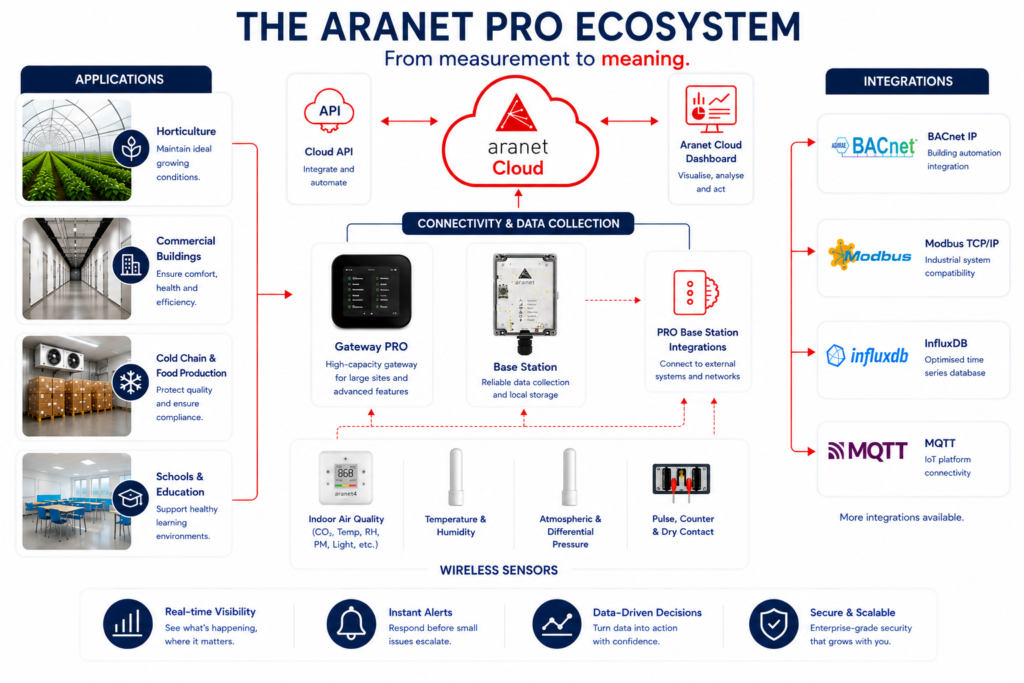
EE800 room transmitter, featuring;
- CO₂, T, RH/Td in one room transmitter
- BACnet, Modbus or analogue outputs
- Auto-calibration for excellent long term stability
- Temperature compensation
- Highly insensitive to pollution
- Snap-on enclosure for easy installation
- Optional display
- Easy user configuration and adjustment
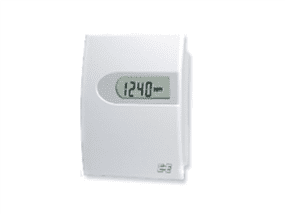
Aranet wireless options; Aranet Pro or Aranet CO2 and Temperature sensors for multiple rooms and locations to constantly monitor the conditions on premises Short video overview of Aranet IoT Environmental Monitoring Solution
Featuring;
- Multiple measurements: CO₂, T, RH/Td in one room transmitter or just CO2 and temperature
- Auto-calibration
- Wireless communications
- Easy installation, no hard wiring just plug and play.
- Centralised monitoring by connection to the base station and Aranet Cloud
- Alarm status text messaging

Please get in touch if you would like more information on how we can help you install an appropriate CO2 monitor for your business. We can advise you about the best models to keep your staff and customers safe.