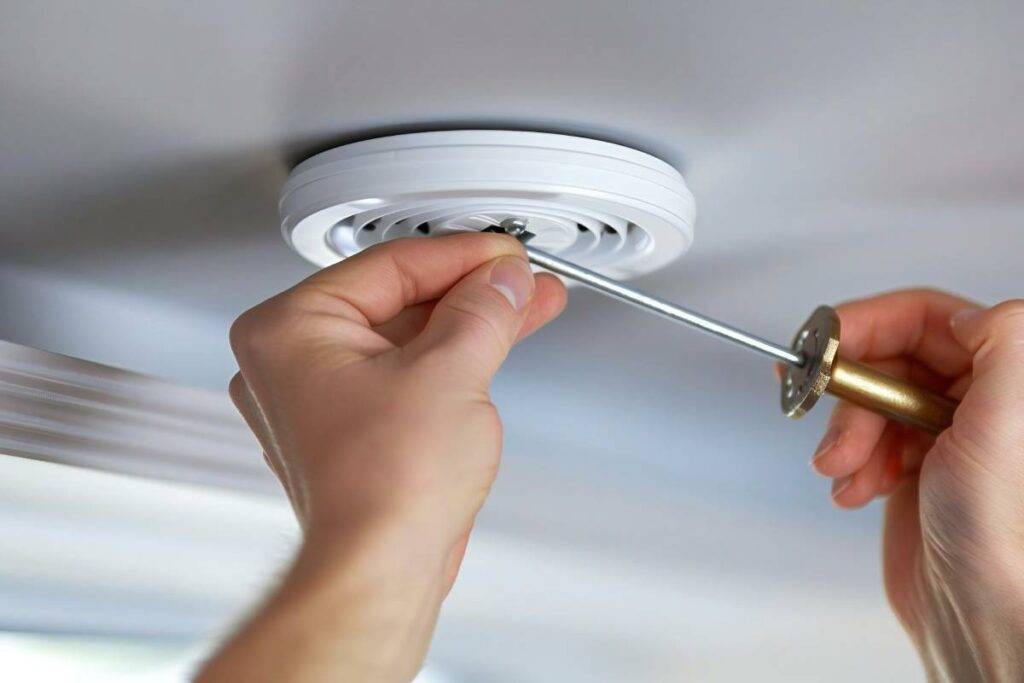

Across Europe, growing access to shared data is revealing alarming trends in carbon monoxide (CO) poisoning. In response, governments are tightening building regulations and requiring CO detectors in homes, holiday rentals and hotels.
In the UK, carbon monoxide exposure leads to over 4,000 A&E visits, 200 hospitalisations, and around 50 deaths annually. While there is no law requiring CO alarms in private homes there is for rental accommodation, since October 2022 landlords in England and Wales must install audible alarms in rooms with fuel-burning appliances—non-compliance can result in fines up to £5,000. In Scotland, all homes (rented or owner-occupied) must meet the 2022 Tolerable Standard, requiring CO alarms in rooms with fixed combustion appliances or flues.
In Europe, installation of CO detectors is down to the discretion of the member-states, some regulations have been introduced for different types of housing;
- Rented and social housing
- Short term rentals, B&Bs and hotels
- Private residences
Poland, Italy, Monaco, and Spain have all introduced laws mandating the installation of CO detectors in short term rentals, B&Bs and hotels which have implementation dates through to 2026.
Scotland, Estonia, and Poland have introduced laws mandating the use of CO detectors in all homes and England, Wales, N. Ireland, and Ireland have laws covering rental homes and social housing.
Other European countries, like France—which sees nearly 4,000 serious cases of CO poisoning and around 100 deaths each year—and Germany, with 118 accidental CO-related deaths in 2020, don’t have national laws requiring CO alarms. However, they address CO safety through building codes, state-level regulations, and public awareness campaigns.
Across Europe, the European Union and the European Free Trade Association have agreed on common standards—like *EN 50291—to make sure CO detectors are safe and reliable. However, as mentioned earlier, each country decides whether to make their installation mandatory.
Thanks to better public awareness, advances in technology making detectors more affordable and accurate, and pressure from health and safety groups, many European countries now see CO alarms as essential for saving lives, not just optional extras.
CO Sensors Galore: How to Find the Best Fit for use in residential alarms?
Firstly, since the detector must conform to the *EN-50291 standard mentioned above, using a gas sensor that already complies with sensing requirements is reassuring—it saves OEMs the time and effort of evaluating sensors to confirm they fulfill the necessary specifications.
The specifications the sensors must meet are:
- Sensitivity & Response Time – The sensor must respond to 30, 50, 100, and 300 ppm CO within defined time windows.
- Baseline Stability – The sensor has to maintain low baseline drift across temperature/humidity range over its lifetime (typically 7–10 years).
- Long-Term Stability / Drift – The sensor must be sufficiently robust to ensure the device passes long-term exposure tests to CO.
- Repeatability & Accuracy – The sensor output must allow the detector to stay within allowable tolerance bands (typically ±20%) over time.
- Cross-Sensitivity – The sensor should have minimal cross-sensitivity to hydrogen, hydrocarbons, ethanol, methane, NO₂, SO₂, or humidity.
- Temperature & Humidity Tolerance – The sensor is required to function accurately from –10°C to +40°C, at relative humidity of up to 90% (non-condensing).
In addition to the above the sensor characteristics below are also desirable:
- Warm-up time – Minimal, ideally <60 seconds from power-on.
- Calibration – The sensor must be stable enough to support calibration-free operation in the field.
- Output type – This must be compatible with detector electronics (e.g.microampere-level current for electrochemical sensors).
Why are CO sensors in residential alarms typically electrochemical?
To measure CO at 30 ppm and lower, the sensing technology must be highly sensitive, stable, and low-noise. Several technologies can detect CO at these low levels, but in residential alarms, one stands out as the industry standard.
Electrochemical sensors offer an ideal combination of accuracy, affordability, low power consumption, and compact size, making them the preferred choice for EN 50291-compliant residential CO alarms. They consistently meet the performance thresholds of 30, 50, 100, and 300 ppm defined in the standard.
Note that many CO electrochemical sensors have a cross sensitivity to H₂, but this is not commonly present indoors at levels high enough to significantly interfere with CO detection so is not limited within EN 50291.
Looking at the alternative technologies:
NDIR has poor sensitivity at low ppm without complex optics, higher power use and is less compact and more expensive.
MOS offers poor selectivity, drift and humidity sensitivity, and due to its heating element requires higher power.
Photoacoustic Spectroscopy / Laser-Based Sensors are not an alternative for use in consumer devices as they are costly and too complex.
Electochemical type: Two or three electrodes?
Two for the following reasons:
Simplicity of Circuit Design – simpler front-end analogue circuitry as there is no need for a potentiostat as in the case of 3-electrode sensors to maintain a fixed working-to-reference potential. This reduces cost, size, and power consumption
Lower Power Consumption means a longer life
Cost-Effectiveness – fewer components means a lower manufacturing cost
The performance of 2 electrode sensors is adequate over 30-400 ppm range for a detection rather than control application.
TGS 5141

What 2 electrode electrochemical sensors do Figaro offer?
A reliable well-established sensor, first introduced in 2015 as the world’s smallest electrochemical CO sensor. It is noted for its compact size and long life. This sensor meets EN50291 and EN54-31 requirements and is a UL2034 recognised component.
The TGS5141 is as compact as a small watch battery, made possible by its solid electrolyte design, which removes any need for positional alignment. It’s battery-powered and delivers key advantages: a 10-year lifespan, linear output, excellent repeatability and selectivity, and simple calibration. Each unit is pre-calibrated and barcoded with its unique sensitivity data, making setup quick and easy.
TGS 5042

What 2 electrode electrochemical sensors do Figaro offer?
The precursor to the TGS 5141, was first launched in 2006. Sales volumes remain high to date. This AA battery sized sensor contains a low-concentration alkaline liquid electrolyte, resulting in a lower humidity dependency compared with a solid electrolyte (within ±5% of the reading), but no positional flexibility since the electrode needs to remain immersed in electrolyte with the Gas inlet (vent hole) facing downward. This sensor is used in scenarios where accuracy is more important than sensor size.
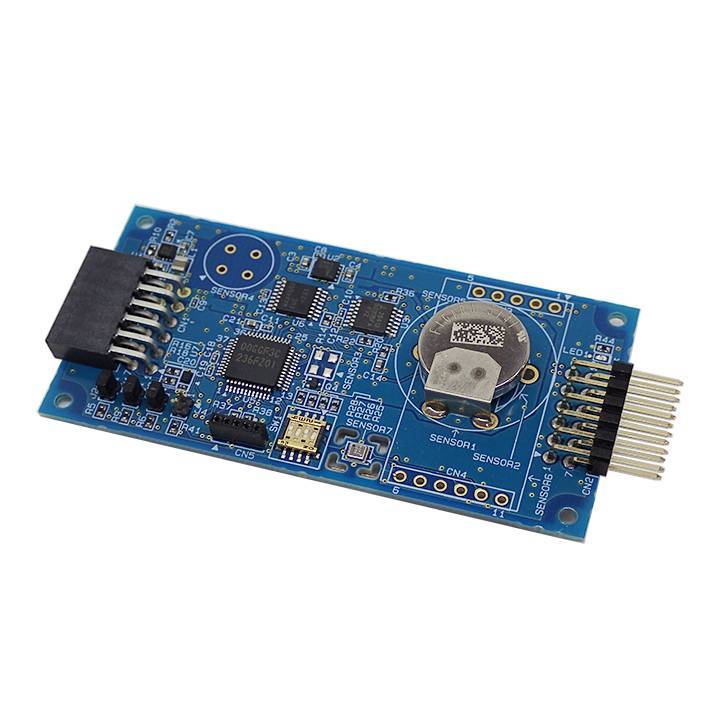
How Figaro can help save time when initiating the evaluation process
Choose the proven analogue EM module or the advanced PDEM evaluation module, which comes pre-calibrated with built-in temperature and humidity compensation, dual analogue/digital
outputs, and integrated data logging software to accelerate development and get up and running as soon as possible.
Speak to OMNI Sensors & Transmitters for Carbon monoxide detectors and sensors
Please call, or contact us through our website if you would like further information.
www.sensorsandtransmitters.com